
The challenge for B2B SMEs is not creating content, but cutting through the noise. This comprehensive article moves beyond high-level theory to provide a tactical, step-by-step operational plan. We analyze the shift from ‘more traffic’ to ‘trusted utility’ and detail seven specific strategies from Artificial Intelligence Optimization (AIO) and ‘Zero-Click’ social content to budget-friendly Account-Based Marketing. Complete with B2B examples and a 90-day implementation roadmap, this is your essential guide to driving revenue in a saturated digital landscape.
The State of B2B Marketing in 2026
By 2026, the barrier to entry for creating content has effectively disappeared. Artificial Intelligence allows anyone to generate articles, emails, and social media posts in seconds. This has created a congested digital environment where buyers are overwhelmed by information. For Small and Medium Enterprises (SMEs), this presents a specific challenge: you cannot out-spend large competitors on advertising, and you cannot out-produce them in content volume.
However, this shift also presents an opportunity. Because there is so much generic, AI-generated content, buyers are craving authenticity, deep expertise, and verified data. When identifying the top marketing strategies for b2b success in this new landscape, the focus must shift from “volume” to “utility.” The strategies that work in 2026 are not about reaching the most people; they are about building the deepest trust with the right people.
This article details seven specific operational plans. These are not theoretical concepts; they are the top marketing strategies for b2b SMEs that need to drive revenue without enterprise-level budgets. Each section includes the rationale, the necessary tools, a step-by-step implementation plan, and metrics to track.
Strategy 1: Artificial Intelligence Optimization (AIO) and Zero-Click Content
The Strategic Rationale
For the past decade, the primary goal of content marketing was to drive traffic to a website. Marketers wrote blog posts to rank on Google so that users would click, visit the site, and fill out a form. In 2026, this behavior has changed.
Two factors are reshaping what we consider the top marketing strategies for b2b regarding search and social:
- Search Generative Experience (SGE): Search engines now use AI to answer questions directly on the results page.
- Social Media Algorithms: Platforms like LinkedIn prioritize content that keeps users on their app, penalizing external links.
Therefore, one of the top marketing strategies for b2b today is optimizing for “Mental Availability” rather than just traffic. You want the user to consume your expertise where they are, so that when they are ready to buy, they remember your brand.
Case Study Analysis: Cognism
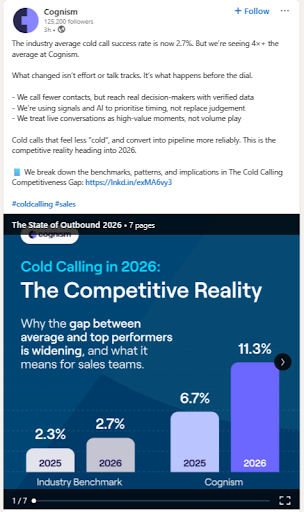
Cognism, a B2B data provider, identified this trend early. They shifted their marketing team’s focus away from “clicks” and toward “consumption.” They took their high-value data, such as reports on cold calling success rates and published it directly on the LinkedIn feed. They did not gate this content behind a form.The Result: Their content received significantly more views because social algorithms boosted it. Buyers trusted them more because they provided value without asking for anything in return.
Implementation Plan for SMEs
Part 1: Optimizing for AI Search (AIO)
You must train Google’s AI to recognize your company as the authority.
Step 1: Audit Your FAQ and Service Pages Identify the top 20 questions your sales team receives. For each question, create a dedicated section on your website.
Step 2: Apply the “Answer Block” Structure To execute this one of the top marketing strategies for b2b effectively, you must structure data for machines.
- The Heading: State the question clearly (e.g., “What is the average cost of commercial solar installation?”).
- The Definition (The Snippet): Immediately below the heading, write a direct, 40-to-60-word answer. Do not fluff this section. Use simple sentences.
- The Data Table: Create a comparison table. AI models are excellent at reading tables.
Step 3: Cite Your Sources AI trusts content that cites other authoritative sources. Link to government data or industry reports. This signals to the search engine that your content is fact-based.
Part 2: Executing “Zero-Click” Social Content
This strategy requires you to give away your best information on social media without asking for a click.
Step 1: The PDF Carousel Strategy LinkedIn currently gives high organic reach to PDF documents that users can scroll through horizontally.
- Content Source: Take a whitepaper or a long blog post you have already written.
- Design: Break it down into 8 to 10 slides.
- Posting: Upload this as a document. Do not put a link in the post body.
Step 2: The “Text-Only” Deep Dive Write a long-form text post that solves a specific problem.
- The Hook: Start with a strong statement.
- The Body: Use bullet points to make it readable.
- The Plug: If you must include a link, place it in the first comment.
Metrics to Track
- Search Impressions: Use Google Search Console to see visibility.
- Social Engagement: Track likes, comments, and shares.
- Direct Traffic: Track how many people type your URL directly.
Strategy 2: High-Precision Account-Based Marketing (ABM)
The Strategic Rationale
In the past, marketing was often a numbers game. Account-Based Marketing (ABM) flips this funnel. You start by identifying the 20 companies you should win, and you direct all your resources toward them. Because it reduces waste, ABM is consistently cited as one of the top marketing strategies for b2b for companies with limited budgets.
Case Study Analysis: Vymo
Vymo, a sales enablement platform, utilized a precise ABM strategy. They mapped out the decision-makers at their target accounts and surrounded them with relevant messages across different channels, creating an “echo chamber” effect.
Implementation Plan for SMEs
Phase 1: Building the Target List
Do not rely on intuition. Use data.
Step 1: Define Techgraphic Fit – Use a tool like BuiltWith or Apollo.
- Example: If you sell a Shopify plugin, your target list should only include companies that use Shopify.
Step 2: Identifying Trigger Events – Timing is critical. Look for these triggers on LinkedIn Sales Navigator:
- New Leadership: A new VP often brings a budget.
- Funding Rounds: A company that just raised capital has aggressive growth targets.
Step 3: The “Tiering” System
- Tier 1 (5 Accounts): Must-win, 100% customization.
- Tier 2 (20 Accounts): Good fits, semi-customized.
- Tier 3 (50 Accounts): Lower priority, automated outreach.
Phase 2: The Orchestrated Campaign
For your Tier 1 accounts, execute a coordinated attack. This coordination is what makes ABM one of the top marketing strategies for b2b lead generation.
Week 1: Soft Touch
- Action: Follow key stakeholders on LinkedIn. Engage with their content.
Week 2: The “Lumpy Mail” (Direct Mail)
- Action: Send a physical package (a book or printed case study) to their office.
- Message: “I saw you are growing your sales team. This book helped us think about sales structure.”
Week 3: The Digital Outreach
- Action: Send a personalized email or LinkedIn video message referencing the package.
Week 4: The Air Cover (Ads)
- Action: Run a “Sponsored Content” ad on LinkedIn targeting only employees of those 20 companies.
Metrics to Track
- Account Penetration: New connections at target accounts.
- Engagement Rate: Ad clicks and email replies.
- Pipeline Value: Total dollar value of opportunities created.
Strategy 3: Founder-Led Sales and Employee Advocacy
The Strategic Rationale
Trust in corporate logos is low. People buy from people. For an SME, the Founder is the biggest marketing asset. Leveraging the personal brand of leadership is widely considered one of the top marketing strategies for b2b because it bypasses the skepticism buyers have toward corporate advertising.
Case Study Analysis: Lavender
Lavender, an email assistant tool, grew rapidly by leveraging their team’s personal brands. The founders posted daily advice on how to write better emails, building a community of fans rather than just customers.

Implementation Plan for SMEs
Part 1: The Founder’s Content Strategy
The founder must commit to posting on LinkedIn 3-4 times per week.
Content Pillar 1: The “Build in Public” Post
- Template: “We tried X strategy last month and it failed. Here is what we learned.”
- Why it works: Vulnerability builds trust.
Content Pillar 2: The “Contrarian” Post
- Template: “Everyone says you should do X. I believe you should actually do Y. Here is why.”
Content Pillar 3: The “Customer Story” Post
- Template: “Our client [Name] was struggling with [Problem]. We fixed it by changing [Process].”
Part 2: The Employee Advocacy Program
To fully realize the potential of one of the top marketing strategies for b2b, you must involve the team.

Step 1: Curate Content Every Monday, send the team “3 Things to Share this Week.”
Step 2: Provide Templates Write a suggested caption they can use, but encourage them to rewrite it.
Step 3: The “Comment Party” When an employee posts, the team should comment within the first hour to signal engagement to the algorithm.
Strategy 4: Video-First Communication
The Strategic Rationale
Text-based communication lacks tone and nuance. By 2026, business buyers are accustomed to short, visual content. Integrating video into your sales process is one of the top marketing strategies for b2b to modernize your outreach and increase response rates.
Case Study Analysis: Loom Users
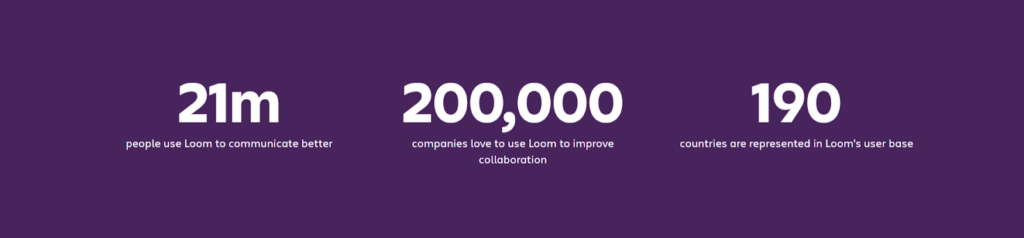
Companies that integrated screen recording tools into their sales process saw dramatic improvements. Instead of sending a cold email, they sent a video showing the prospect’s website and pointing out specific errors.
Implementation Plan for SMEs
Part 1: Video for Sales Outreach
Stop sending generic cold emails.
The Tech Stack:
- Hardware: A decent webcam and USB microphone.
- Software: Loom, Vidyard, or Drift Video.
The Script (The “Audit” Approach):
- Opening: “Hi [Name], I’m on your website right now and I noticed something interesting.”
- The Insight: Share your screen. “See this button here? It’s broken on mobile devices.”
- The Close: “I’d love to show you how to fix this. Let me know if you’re open to a chat.”
Part 2: Video for Marketing (Repurposing)
Repurposing content is essential when executing the top marketing strategies for b2b with a small team.
The Workflow:
- Select a Recording: Take a 45-minute webinar.
- Use AI Clipping Tools: Upload to OpusClip or Munch.
- Generate Clips: The AI cuts it into 10-15 short vertical videos.
- Distribution: Post on LinkedIn and YouTube Shorts.
Strategy 5: The Podcast Content Engine
The Strategic Rationale
Most companies think of a podcast as a way to get listeners. This is the wrong metric. In 2026, a podcast is an Engine for Relationships. Using a podcast to network with prospects is one of the top marketing strategies for b2b business development.
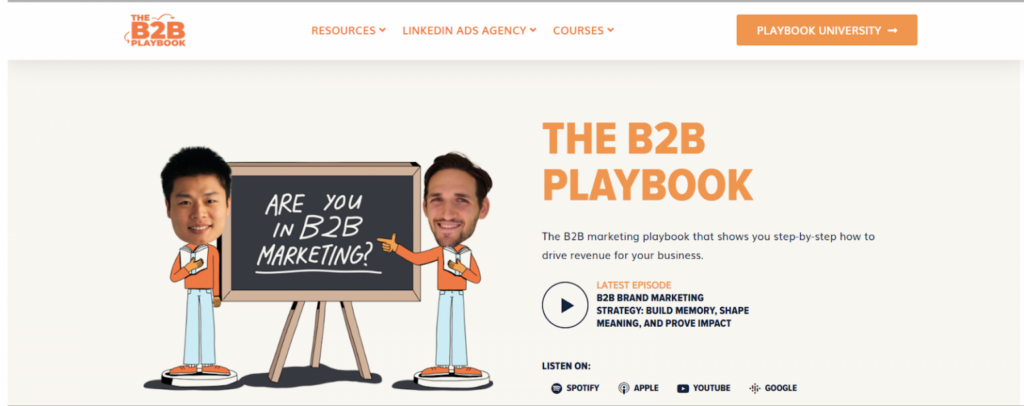
Case Study Analysis: The B2B Playbook
The creators of “The B2B Playbook” podcast used their show to interview experts. They then sliced those interviews into clips, newsletters, and guides. The podcast was the source of their marketing.
Implementation Plan for SMEs
Part 1: The Guest Strategy (Account-Based Podcasting)
Do not try to get famous guests. Invite your ideal customers.
The Outreach Script: “Hi [Name], I’m hosting a podcast series on [Topic] and I’d love to interview you about your approach. We don’t want to sell you anything, just want to feature your expertise.”
Part 2: The Production & Repurposing Workflow
Step 1: Recording Use a platform like Riverside.fm for high-quality local recording.
Step 2: Editing Use Descript to edit video by editing text.
Step 3: The Asset Checklist From one episode, produce:
- 1 Long-form YouTube Video.
- 3 Short Vertical Clips.
- 1 Blog Post (using AI to summarize).
- 1 Newsletter.
Strategy 6: Dark Social and Community Engagement
The Strategic Rationale
“Dark Social” refers to private sharing channels: WhatsApp groups, Slack communities, and DMs. Attribution software cannot track this. However, influencing these private conversations is one of the top marketing strategies for b2b for building genuine word-of-mouth.
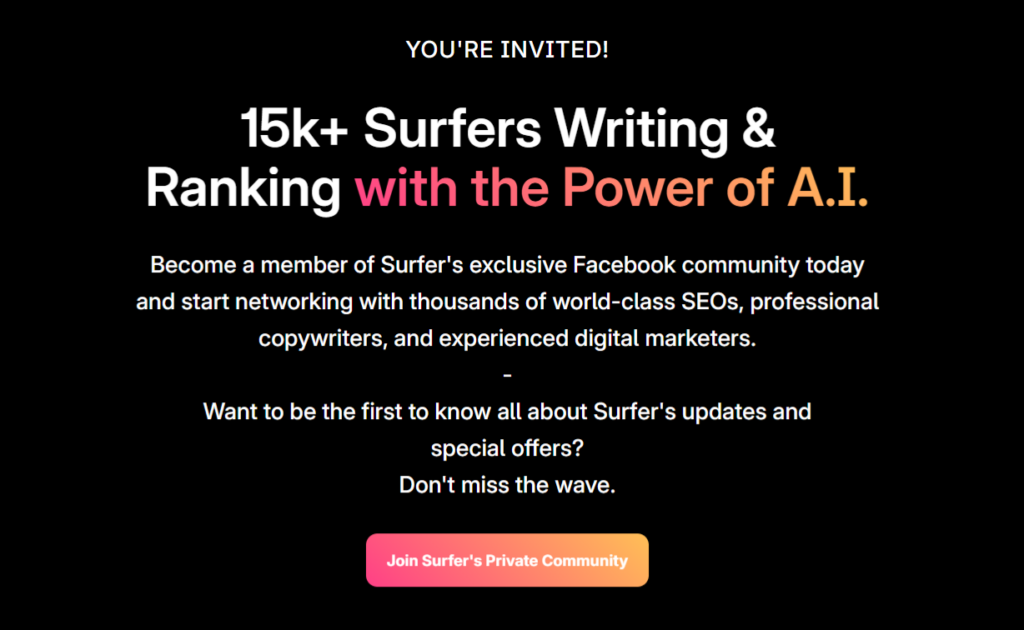
Case Study Analysis: SurferSEO
SurferSEO built a private Facebook community for its users. By nurturing this community, they created evangelists who would recommend the tool in other private groups.
Implementation Plan for SMEs
Part 1: Listening
Step 1: Identify the Watering Holes Find where your customers hang out (e.g., Pavilion, Exit Five, Stack Overflow).
Step 2: Monitor Keywords Use notification settings to alert you when someone uses keywords related to your industry.
Part 2: Helpful Participation
The Rule of Thumb: Give 90% help, 10% mention.
The Scenario: Someone asks, “Has anyone used [Your Competitor]?”
The Response: “I have used them. They are good at X, but struggled with Y. If you need Y, you might want to look at [Your Company], full disclosure, I work there.”
Part 3: Measuring the Unmeasurable
To track the effectiveness of top marketing strategies for b2b like Dark Social, you must ask the customer directly.
The “Self-Reported Attribution” Field: On your “Contact Us” form, add a required open text field: “How did you hear about us?” You will see answers like: “Someone recommended you in the Pavilion Slack group.”
Strategy 7: Interactive Engineering (Utility Marketing)
The Strategic Rationale
In 2026, content is abundant, but utility is rare. Interactive tools like ROI calculators or maturity assessments are consistently ranked among the top marketing strategies for b2b lead generation because they provide personalized value.
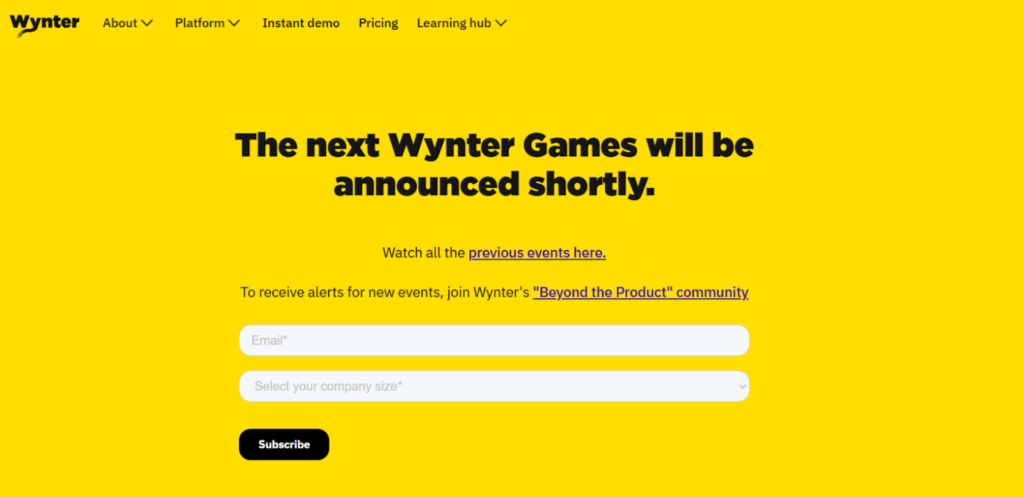
Case Study Analysis: Wynter
Wynter created simple games and tests on their website. These gave the user a score. To improve their score, the user engaged deeper with the brand.
Implementation Plan for SMEs
Step 1: Choose the Right Tool Type
- The ROI Calculator: “How much money could you save?”
- The Grader: “Rate your Cybersecurity readiness.”
Step 2: Build Without Code
Use No-Code platforms like Outgrow or Typeform to build these assets quickly.
Step 3: Gating Strategy
- Recommendation: Use a “Soft Gate” (allow use, ask for email for the report). This approach ensures higher usage rates, making it one of the top marketing strategies for b2b for high-volume lead capture.
Metrics to Track
- Completion Rate: How many people finish the quiz?
- Cost Per Lead (CPL): Compare CPL of the tool vs. a standard whitepaper.
Your 90-Day Roadmap
Implementing these tactics requires a phased approach. When considering the top marketing strategies for b2b outlined above, prioritize them as follows:
Month 1: Foundation & Trust
- Audit and rewrite website FAQs for AI Optimization (Strategy 1).
- Start the Founder LinkedIn routine (Strategy 3).
- Add the “How did you hear about us?” field to your forms (Strategy 6).
Month 2: Outreach & Video
- Build your Tier 1 Account List (Strategy 2).
- Train the sales team on Loom/Video outreach (Strategy 4).
- Launch the first “Zero-Click” PDF carousel on LinkedIn (Strategy 1).
Month 3: Expansion
- Record the first 4 episodes of your “Customer Interview” podcast (Strategy 5).
- Launch a simple ROI calculator on your website (Strategy 7).
By following this roadmap, you will have successfully implemented the top marketing strategies for b2b designed for the 2026 landscape. The winner is not the loudest company; it is the most helpful company. This handbook ensures your marketing engine is resilient, data-driven, and rooted in genuine customer value.
If you’re a B2B SME ready to scale with the right marketing strategies, let’s talk.