
Traditional industrial branding often relies on stock photography and polished facades, but global buyers in 2026 demand transparency. This article analyzes why perfect branding fails and provides a tactical guide on how Indian manufacturing marketing must pivot to Raw Authenticity. We cover specific strategies for Video Sales Letters (VSLs), LinkedIn messaging, and website design to convert skepticism into high-ticket contracts.
Why are international buyers skeptical of typical manufacturing websites?
Open the website of a mid-sized Indian industrial company, and you will likely see a stock photo of a pristine skyscraper or men in clean suits shaking hands. However, the reality of the facility whether in the MIDC belt or Peenya is different. It is hot, loud, and filled with the vibration of heavy machinery.

For years, Indian manufacturing marketing has attempted to hide this reality to look corporate or international. But in 2026, this approach creates suspicion rather than trust.
With the rise of AI-generated images, anyone can create a fake perfect factory. Global buyers from Germany, the US, or Japan are aware of this. When they see a sanitized website, they suspect the company is a trader or middleman, not a manufacturer. They know real engineering involves heat, noise, and complex problem-solving. To win their trust, you must stop hiding the factory floor and start using the reality of your production capabilities as your primary asset.
These buyers increasingly weigh sustainability too, which is where green marketing strategies come in.
How does showing production reality increase B2B trust?
Why does a buyer trust a raw, handheld video of a lathe machine more than a high-budget 3D animation?
This is explained by the behavioral concept of the Labor Illusion. Buyers value a product higher when they can visually verify the effort and skill required to produce it.
- The Problem with Polish: When a buyer sees a stock image of a perfect engineer, they identify it as an advertisement. They assume the company is compensating for a lack of substance.
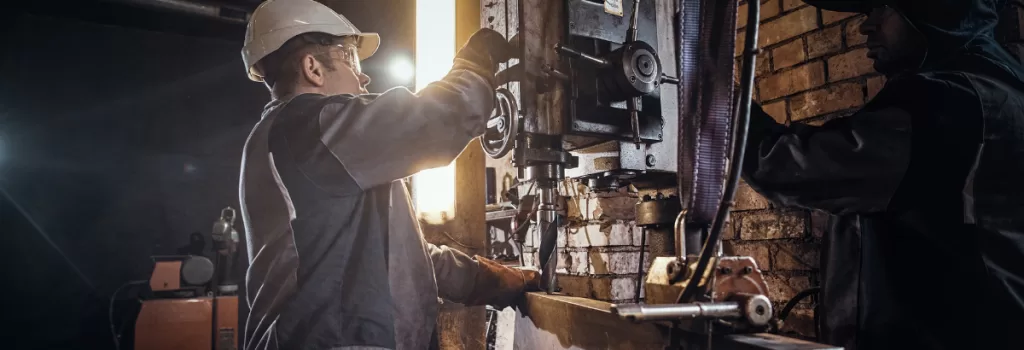
- The Value of Reality: When a buyer sees a technician measuring tolerances on a heated component, they identify it as evidence. They see the skill, the specialized equipment, and the workforce.
Indian manufacturing marketing must pivot to this equation: Trust = Transparency + Visible Effort. By showing the actual shop floor, you prove you are the source, allowing you to bypass skepticism and command higher margins.
What is the best video strategy for manufacturing VSLs?
To effectively use Indian manufacturing marketing to close deals, your Video Sales Letter (VSL) must abandon the corporate voiceover script.
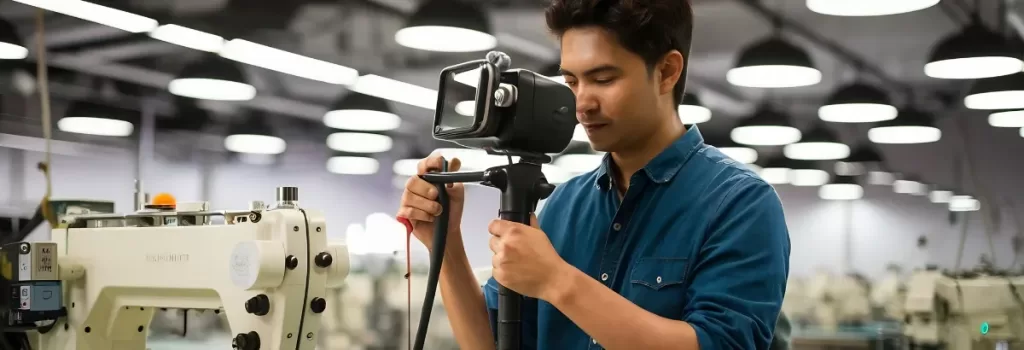
- Visual Style: Use handheld cameras. Walk through the shop floor to demonstrate the scale of operations. Do not use stabilization that makes the footage look artificial; let the camera move with the environment.
- Audio Strategy: Do not mute the background noise. The sound of a press or a CNC machine signals capacity. A silent factory implies inactivity.
- Content Focus: Instead of a general company overview, film your Chief Engineer explaining a specific technical challenge. For example, have them detail how they solved a heat dissipation issue in a specific alloy. This demonstrates technical competence far better than a list of certifications.
How should manufacturers manage social media messaging?
LinkedIn is often misused in the industrial sector for festival greetings or generic motivational posts. Effective Indian manufacturing marketing requires a different approach.
- The Daily Log Approach: Treat your company page as an operational logbook.
- Show Case Studies of Failure: Post a photo of a rejected part and explain why it was rejected. For instance: "We scrapped this batch because the tolerance drifted by 0.02mm."
- Why This Works: Admitting to a strict quality control process proves integrity. It tells the buyer that you prioritize their specifications over your own material costs. This level of radical transparency is rare and highly attractive to procurement officers.
How should an industrial website be designed for conversion?
The standard blue-and-white template used by IT service companies is ineffective for heavy industry. Indian manufacturing marketing needs a distinct visual identity that reflects the nature of the work.
- Color and Texture: Use "Dark Mode" aesthetics, industrial greys, blacks, and high-contrast oranges. This differentiates you from service providers and signals "heavy engineering."
- Hero Section: Replace static banners with high-definition video loops of your most visually impressive process, such as molten pouring, laser cutting, or robotic welding.
- Copywriting: Be specific and geographical. Instead of World Class Quality, write Forged in Pune. Exported to 12 Countries. <1% Rejection Rate."
How can email marketing generate leads for manufacturers?
Email remains a critical channel, but the strategy must shift from Newsletters to Personal Correspondence.
- Format: Use plain text. Avoid HTML templates with heavy graphics, as these often trigger spam filters in corporate firewalls.
- Content: Do not send general company updates. Send industry-specific intelligence.
- Example: "We noticed raw material prices for Copper are fluctuating. Here is how our inventory strategy is securing pricing for our Q3 deliveries."
- The Goal: The objective of Indian manufacturing marketing via email is to be seen as a consultant and partner, not just a vendor looking for orders.
FAQs
Why are our open rates dropping for manufacturing newsletters? B2B context?
Open rates are likely dropping because the content is not segmented. Broadcast emails to a general list are no longer effective. The trend is Account-Based Marketing (ABM). If you send a generic brochure to 5,000 people, it will be ignored. You must research the specific pain points of a target account such as a recent supply chain failure and write an email addressing that specific issue. Low open rates usually indicate a lack of relevance to the specific reader.
Should we use AI to write cold emails to international buyers?
You should use AI for research, but not for drafting the final copy. Buyers can identify ChatGPT-generated text because it often lacks nuance and uses generic adjectives like cutting-edge. Indian manufacturing marketing succeeds when it feels human. Use AI to summarize a prospect's annual report, then write a short, direct email yourself. A concise, human-written note outperforms a grammatically complex AI script.
How do we stop our technical catalogs from going to spam?
Never attach large PDF catalogs to a first cold email. Corporate firewalls at major aerospace or automotive companies will block these immediately. Instead, use a Zero-Party Data loop. Send a text-only email asking if they would like to see the specs. When they reply Yes, send the link. This reply signals to the email provider that you are a trusted sender, ensuring future emails land in the inbox.
Is a newsletter or a personal check-in better for B2B sales?
For industrial clients, a personal check-in vastly outperforms a newsletter. Newsletters are often viewed as marketing noise, while a personal note is viewed as service. Instead of "September Updates," send an email titled "Update on Steel Pricing Trends." If you must send a newsletter, format it as a Technical Digest that links to valuable resources rather than just company news.
How frequently should we email existing manufacturing clients?
Move from Time-Based sending to Trigger-Based sending. Do not email simply because it is a certain day of the week. Email when a relevant event occurs. For example, if a client visits your Prototyping page multiple times, send them a case study on rapid prototyping immediately. If a new government incentive is announced, email them explaining how it reduces their costs. Relevance excuses frequency.
Can we embed video in our marketing emails?
Most email clients (Outlook, Gmail) do not support video playback directly in the email body. Indian manufacturing marketing strategy should instead use a GIF thumbnail. Create a 3-second animated GIF of a machine in action and embed it with a Play button overlay. When clicked, this should redirect the user to a landing page where the full video plays. This visual movement significantly increases click-through rates.
How do we handle GDPR when marketing to European companies?
You cannot buy lists and blast emails to European prospects; you must use Double Opt-In"or legitimate interest. Focus on Inbound Lead Magnets. Create a tool on your website, such as a "Landed Cost Calculator (India vs. China)." To get the results, the user must provide their email. This grants you explicit consent to market to them, keeping you compliant and providing a higher quality lead.
What subject lines work best for industrial procurement?
Avoid sales-heavy subject lines. The most effective subject lines in Indian manufacturing marketing are boring, factual, and internal-sounding. Examples include "Q3 Capacity Query," "Spec sheet for [Part Number]," or "Logistics update regarding Mumbai Port." These subject lines trigger a "work mode" response in the buyer's brain, making the email feel like a message from a colleague or current supplier.
Should we segment our email list by industry or job title?
Segment by "Pain Point" rather than just industry. An engineer is interested in tolerance and speed, while a procurement manager focuses on cost and credit terms. If you send a cost-saving email to an R&D engineer, it will likely fail. You must tailor the message to the specific anxiety of the role. Group your list into "Technical Decision Makers" and "Commercial Decision Makers" for better results.
What is the most important metric for manufacturing email campaigns?
Open rates are unreliable due to privacy features like Apple's MPP. The most important metrics are "Reply Rate" and "Meeting Booked Rate." In high-value Indian manufacturing marketing, you do not need thousands of opens; you need a handful of meaningful conversations. If you send 50 targeted emails and receive 4 replies, the campaign is a success. Focus on engagement over vanity metrics.