

This is a comprehensive guide to mastering video sales methodology for the Indian B2B landscape. However, we know founders are often short on time. So, if you are looking for someone trustworthy to build a video sales letter for your B2B, let’s have a conversation. You can take a look at our Video Trust Builder service here. If you want to know how to make video sales letters for your business now, we’ve included a 10-step Checklist immediately below. For those looking to build a sustainable, founder-independent sales engine, the full article on how to make video sales letters for Indian B2B SMEs deconstructs the psychological frameworks and deployment strategies used by high-growth Indian enterprises.
10-step Checklist on How to Make Video Sales Letters
- Pick one buyer and one painful problem you solve.
- Write the big promise in one line (result + timeline/effort).
- Open with a pattern-break hook (contrarian truth or bold claim).
- Agitate the pain with real-life moments (what it costs them daily).
- Name the real villain (wrong method, hidden cause, old belief).
- Introduce your unique mechanism (your process/framework) in simple words.
- Show proof (1–3 quick case stories, numbers, screenshots, testimonials).
- Present the offer clearly (what they get, how it works, timeline, support).
- Handle top objections (price, time, trust, “will it work for me?”).
- Give a single CTA (book a call / buy now) + urgency/scarcity + recap promise.
Why is founder-dependency a critical risk in Indian B2B scaling?
Founders leading B2B enterprises across India, from corporate training firms to green energy consultancies, manufacturing units, and IT companies, frequently encounter a persistent operational constraint as they scale: the dependency on founder-led sales conversion.

The fundamental challenge is clear: the founder consistently achieves the highest conversion rates, and precisely because of this dependency, the enterprise struggles to scale beyond the founder’s individual capacity.
In high-stakes B2B negotiations across Indian markets, founders close deals through their deep product knowledge, understanding of client pain points, and the inherent authority of ownership. When sales responsibilities transfer to team members, conversion rates decline predictably. Junior staff members follow prescribed scripts but often struggle when addressing complex objections, frequently defaulting to price-based discussions where experienced founders would emphasize value propositions and business outcomes.
The reality is straightforward: founders cannot participate in fifty meetings weekly. Sustainable scaling requires systematic replication of the founder’s pitch delivery, expertise, and persuasive approach.
The strategic solution is the Video Sales Letter (VSL).
What distinguishes a Video Sales Letter from a corporate brand video?
A VSL differs fundamentally from generic corporate brand videos featuring aspirational music, aerial cinematography, or abstract messaging. Rather, it functions as a strategic, direct-response sales presentation with a singular objective: converting cold prospects into warm, qualified leads prepared for meaningful business dialogue.
The VSL operates as a digital version of the founder’s optimal pitch delivery, working continuously to educate prospects and drive conversions. Unlike passive content marketing assets, VSLs actively guide prospects through decision-making frameworks, address anticipated objections, and establish the authority necessary for trust-based business relationships. At Hootbox Media Works, we tried a completely different approach for our VSL. We tried a slightly humorous script with an AI-video look for maximum impact based on the agitation and desire of our target audience.

Why are VSLs becoming essential for Indian B2B markets?
The acceleration toward VSLs represents a strategic response to documented changes in buyer behavior, particularly relevant within the Indian B2B ecosystem.
Compressed Sales Cycles Through Pre-Qualification
Research demonstrates that effective video content can shorten B2B sales cycles by up to 23%. By systematically addressing core objections before initial conversations, VSLs enable sales teams to bypass preliminary education phases and proceed directly to negotiation and customization discussions.
The Self-Directed Research Preference
Contemporary research indicates that 75% of B2B buyers prefer a representative-free experience during research phases. Decision-makers seek autonomous learning experiences aligned with their schedules, rather than coordinated video conferences. VSLs accommodate such preferences while maintaining message fidelity.
Standardization Across Complex Industries
Within regulated or technically complex industries common across Indian B2B sectors (pharmaceuticals, aerospace, industrial automation, enterprise software), VSLs ensure pitch accuracy and legal compliance consistently, eliminating the variability that comes with human-delivered presentations.
Revenue Growth Acceleration
Companies implementing video strategies in B2B marketing experience 49% faster revenue growth compared to organizations without video integration. The differential stems from improved engagement, accelerated trust development, and enhanced message retention.
Superior Information Retention
Humans retain merely 10% of information consumed through text, yet recall 95% of messages when presented through video formats. This retention difference proves particularly critical when communicating complex technical specifications, methodology frameworks, or multi-stage implementation processes common in Indian B2B transactions.
What are the strategic VSL frameworks for Indian businesses?
Different business contexts require distinct VSL approaches. Founders should select frameworks aligned with their specific market positioning and buyer journey stage.

Type One: The Direct Conversion VSL
Optimal Application: High-intent traffic sources, bottom-of-funnel prospects, retargeting campaigns
Structural Framework: “The enterprise addresses [Specific Problem] for [Target Industry] utilizing [Proprietary Methodology]. Evidence validates effectiveness. Schedule strategic consultation.”
Deployment Context: This approach performs optimally on dedicated “Request Demonstration” landing pages or within retargeting advertisements directed toward prospects with established brand familiarity. The brevity respects prospect time while communicating value density.
Indian Market Consideration: Given the hierarchical decision-making structures prevalent in Indian enterprises, direct VSLs should acknowledge multiple stakeholders while maintaining focused messaging. References to compliance with Indian regulatory frameworks (GST integration, data localization requirements) enhance credibility.
Type Two: The Value-First Educational VSL
Optimal Application: Consultancies, SaaS platforms, professional services, cold traffic acquisition
Structural Framework: “The following presentation provides a strategic framework for resolving [Specific Business Challenge]. Implementation guidance follows. For customized deployment assistance, strategic consultations are available.”
Deployment Context: This format excels within cold outreach contexts like LinkedIn advertising, Facebook business audiences, cold email campaigns. The generosity-first positioning reduces prospect defensiveness while establishing authority through knowledge transfer.
Indian Market Consideration: Over 70% of new internet users in India prefer consuming content in their local languages. Value-first VSLs targeting tier-2 and tier-3 cities should consider regional language versions or comprehensive subtitling. Educational content demonstrates respect for linguistic diversity while expanding market reach.
Type Three: The Social Proof Case Study VSL
Optimal Application: High-ticket services, complex implementations, longer sales cycles, skeptical prospects
Structural Framework: “The following documentation details precisely how [Named Client] achieved [Quantified Result] within [Specified Timeframe]. The methodology employed follows.”
Deployment Context: This format serves middle-funnel prospects expressing interest while maintaining reservation. The specificity of named clients and documented outcomes addresses skepticism directly. For Indian markets, case studies featuring recognized domestic brands carry particular weight.
Indian Market Consideration: When featuring client success stories, acknowledge the specific challenges of the Indian operating environment, regulatory complexity, infrastructure constraints, workforce diversity, to enhance relevance and applicability for prospects facing similar contexts.
What is the psychological mechanism behind a high-converting VSL?
VSLs achieve superior conversion performance through activation of specific psychological mechanisms unavailable through text-based communication.
Mirror Neuron Activation: The Digital Connection
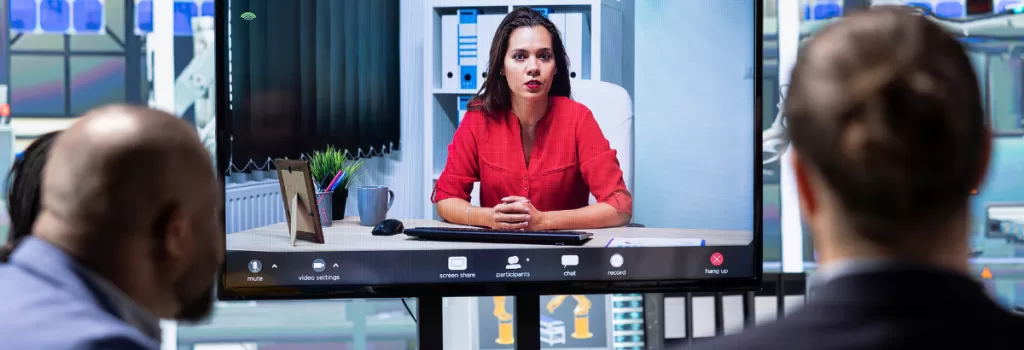
When prospects observe the founder’s facial expressions, vocal tonality, and authentic enthusiasm, neural mirror mechanisms activate within the viewer’s brain, generating empathetic connection and rapport. Such neurological responses create what researchers term the “Digital Handshake”, a sense of personal connection despite physical separation.
Multi-sensory video experiences increase information retention by 400% compared to text-only content, making sales messages more memorable and persuasive across extended decision-making timelines common in B2B transactions.
Authority Positioning Through Teaching
Cognitive bias research demonstrates humans instinctively trust individuals who educate them. When founders deconstruct complex problems through visual demonstrations, whiteboard explanations, screen-shared workflows, annotated presentations, they elevate positioning from vendor status to expert authority. Such positioning proves particularly valuable in Indian markets where educational credentials and demonstrated expertise significantly influence purchasing decisions.
Open Loop Tension: Maintaining Engagement
Effective VSL scripts establish psychological tension through promises of specific insights (“Three critical errors costing profitability will be revealed”) while strategically delaying resolution. Such cognitive “open loops” maintain viewer attention throughout longer presentations, preventing premature abandonment. Properly constructed hooks determine whether 85% of viewers continue watching beyond the initial ten seconds.
How should a B2B VSL script be structured for maximum conversion?
Improvisation undermines conversion performance. Effective VSLs follow structured argumentative frameworks. Hootbox recommends the “PAS+M+C” methodology – a five-stage sequence consisting of Problem identification, Agitation of the pain, the Solution reveal, introducing your unique Mechanism, and a clear Call-to-Action. This framework ensures you don’t just talk about your product, but systematically move a prospect from initial awareness to a scheduled consultation.
Section One: The Hook (0:00 – 0:45)
Opening: The Precision Call-Out
Immediately identify the target viewer with surgical specificity. “Plant managers experiencing unplanned production downtime exceeding industry benchmarks…” Such precision signals relevance instantly, preventing qualified prospects from navigating away.
Setting Expectations: The Value Promise
Articulate specific takeaways clearly. “The following five-minute presentation reveals the three-question diagnostic framework reducing maintenance costs by 20% across fifty manufacturing facilities.” Specific promises outperform vague benefit statements consistently.
Indian Market Application: Acknowledge the specific industry contexts relevant to Indian prospects. References to “compliance with BIS standards,” “alignment with Make in India initiatives,” or “optimization within power cost constraints” demonstrate contextual understanding.
Section Two: Problem Articulation and Agitation (0:45 – 2:30)
Defining the Challenge: The Problem Statement
Define the challenge with clarity and precision. “Current reliance on manual equipment monitoring systems creates reactive maintenance cultures.”
Amplifying Urgency: The Agitation
Intensify awareness of problem severity and consequences. “Such reactive approaches result in emergency repair overtime expenditures, missed delivery commitments to key accounts, eroded profit margins, and competitive disadvantage as rivals implement predictive maintenance strategies.”
Indian Market Application: B2B buying cycles are longer in India and typically involve 6 to 10 stakeholders in decision-making processes. Agitation should acknowledge concerns relevant to different stakeholder perspectives, financial controllers focused on ROI, operations managers concerned with implementation complexity, compliance officers evaluating regulatory alignment.
Section Three: The Mechanism (2:30 – 5:00)
Introducing the Solution: The Paradigm Shift
Introduce the alternative methodology. “Rather than manual logging systems, the solution employs IoT sensor networks coupled with machine learning analytics.”
Demonstrating How It Works: The Methodology Explanation
Demonstrate the approach through visual communication. Utilize screen sharing for software demonstrations, slides for process visualization, or whiteboard illustrations for concept explanation. Hyper-personalized B2B videos powered by AI now dominate campaigns, driving engagement through personalized content.
Technical Depth Calibration: Balance sufficient technical detail to establish credibility without overwhelming non-technical stakeholders. For Indian audiences spanning diverse educational backgrounds, layered explanations, overview followed by optional technical deep-dives, serve effectively.
Section Four: Social Proof and Validation (5:00 – 6:30)
Building Credibility: Evidence Presentation
“The methodology deployed for [Recognized Client Name] within [Specific Industry Context].”
Explaining Why It Worked: Logical Validation
“Effectiveness derived from [Technical Rationale], resulting in [Quantified Outcomes] across [Timeframe].”
Indian Market Application: When possible, feature clients from similar regulatory environments, operational scales, or geographic regions. A Mumbai-based manufacturer finds greater relevance in case studies from Pune or Ahmedabad than from international markets with different operating contexts.
Section Five: The Strategic Call-to-Action (6:30+)
Guiding Next Steps: The Precise Instruction
“The invitation extends not toward immediate purchase, but rather toward scheduling a ‘Strategic Audit’ consultation examining applicability within the specific operational context.”
Removing Barriers: Friction Reduction
Eliminate unnecessary barriers. Integrate calendar booking widgets directly. Provide multiple contact pathways accommodating different communication preferences: WhatsApp for rapid informal contact, email for formal documentation, phone for immediate verbal discussion.
Indian Market Application: Many Indian B2B companies now integrate CRM systems with WhatsApp for seamless communication. Offering WhatsApp-based consultation booking accommodates prevalent communication preferences while demonstrating technological sophistication.
What is the optimal VSL production strategy for B2B?
A frequent strategic error involves excessive production sophistication. Within B2B contexts, overly polished presentations often signal “marketing rhetoric” rather than substantive expertise, particularly among technical decision-makers.
The Hybrid Format: Optimal Balance
The most effective format combines face-to-camera segments with screen-sharing demonstrations, similar to Loom or Zoom recordings rather than studio productions.
Opening Segment: Full-screen founder presence establishing personal connection and credibility
Middle Segment: Screen-sharing transition demonstrating software interfaces, analytical dashboards, implementation frameworks, or documented methodologies
Closing Segment: Return to full-screen founder presence for call-to-action delivery and relationship reinforcement
Audio Fidelity: The Non-Negotiable Requirement
Prospects tolerate visual imperfections, suboptimal lighting, simple backgrounds, basic framing but immediately abandon content with poor audio quality. Investment in quality lapel microphones (₹3,000-8,000 range) represents essential infrastructure, not optional enhancement.
Professional audio communicates respect for viewer time and attention while maintaining engagement through clarity.
The Indian Production Context
For founders operating across India’s diverse infrastructure landscape, recognize that authenticity often outperforms production value in B2B contexts. A founder presenting from a genuine office environment even with ambient sounds reflecting India’s characteristic energy often converts more effectively than sterile studio settings disconnected from operational reality.

Region-wise, where should VSLs be deployed for maximum impact?
India is projected to have over 536 million non-English-speaking internet users by 2025, with 68% of Indian internet users preferring content in their native languages. Such linguistic diversity presents both challenge and opportunity for B2B enterprises.
Regional Language Considerations
Primary Markets: For enterprises targeting decision-makers in tier-2 and tier-3 cities, regional language VSLs dramatically improve engagement. Regional content demonstrates 1.5 to 2 times higher engagement rates according to platform data.
Language Priority Assessment:
- Hindi: Northern markets, broad reach across multiple states
- Tamil/Telugu: Southern manufacturing and technology hubs
- Marathi: Maharashtra’s industrial corridor
- Bengali: Eastern markets and service sectors
- Kannada: Karnataka’s technology and manufacturing clusters
Implementation Approaches
Subtitle Integration: For budget-conscious initial deployment, comprehensive subtitles in target languages provide accessibility while maintaining founder’s authentic voice. Many viewers, particularly younger demographics, prefer subtitles even when content appears in their native language.
Voiceover Localization: For higher-commitment regional market penetration, professional voiceover artists speaking regional languages increase perceived relevance and trust. Such investments prove particularly valuable for high-ticket offerings or extensive regional campaigns.
Script Transcreation: Avoid literal translation. Transcreation, which means creative adaptation beyond literal translation maintains intent, style, and emotional impact. Partner with native speakers possessing industry knowledge to ensure technical terminology accuracy alongside cultural appropriateness.
Strategic Deployment: Where VSLs Generate Maximum Impact
Creating the asset represents merely the initial phase. Strategic deployment determines ROI realization.
Primary Deployment: The Dedicated Landing Page
Construct dedicated landing pages eliminating navigation options. The singular focus: headline, VSL player, calendar booking interface. Send paid traffic – Google Ads, LinkedIn Sponsored Content, targeted Facebook campaigns exclusively to such pages. Conversion rates improve substantially when distraction possibilities are eliminated.
Indian Platform Considerations: YouTube represents the primary video consumption platform in India, with over 95% of Indian YouTube content consumed in regional languages. Consider YouTube hosting with private or unlisted settings for embedding while potentially developing separate public-facing content for organic discovery.
Secondary Deployment: Email Signature Integration
Within professional correspondence, particularly following initial inquiries, include a postscript: “For reference regarding how the firm assisted [Comparable Organization] achieving [Specific Outcome], view the four-minute methodology breakdown: [Link].”
Such passive deployment serves prospects actively researching solutions without appearing overtly salesy in primary communication.
Tertiary Deployment: Pre-Meeting Preparation
Automate VSL distribution within meeting confirmation sequences. When prospects schedule consultations, CRM automation should immediately email the VSL with framing: “Prior to the scheduled consultation, please review the five-minute methodology overview. Such preparation enables the meeting to focus specifically on application within the organization’s unique operational context.”
Prospects viewing VSLs before sales calls demonstrate superior qualification and conversion rates, as the VSL pre-sells methodology while addressing common objections. Meetings transform from educational sessions into strategic application discussions.
Quaternary Deployment: CRM Integration and Behavioral Tracking
Modern video analytics platforms enable tagging prospects in CRM systems based on viewing behavior, allowing hyper-personalized follow-up depending on which video segments prospects consumed.
Implementation Framework:
- Tag prospects who watch >75% as “Highly Engaged”
- Tag prospects who watch 25-75% as “Moderately Interested”
- Tag prospects who watch <25% as “Requires Alternative Approach”
Such behavioral segmentation enables sales teams to personalize outreach based on demonstrated interest intensity, optimizing time allocation toward highest-probability opportunities.
What metrics define VSL success in the B2B sector?
Within B2B contexts, a VSL generating fifty qualified views can produce substantial revenue if those fifty viewers represent decision-makers at target accounts. Avoid fixation on aggregate view counts favoring meaningful engagement and conversion metrics.

Critical Metrics for Indian B2B VSLs
Play Rate: Percentage of landing page visitors initiating video playback. Target minimum: 30%. Suboptimal play rates indicate headline/thumbnail misalignment with audience expectations or technical loading issues. Faster-loading video platforms consistently demonstrate superior play rates and conversion performance.
Engagement Graph Analysis: Identify precise dropout points. If 50% of viewers abandon at the 2:00 mark, script revision at that segment becomes priority. Common dropout triggers: excessive technical jargon introduction, unclear value proposition articulation, pacing deceleration.
Average Watch Time: Percentage of total video duration consumed. For educational VSLs, target >60% completion. For direct sales VSLs, target >75% completion. Indian audiences, particularly from regional markets, often demonstrate higher completion rates when content demonstrates cultural awareness and contextual relevance.
Conversion Rate: Percentage of viewers booking meetings or requesting information. Targets vary by traffic source:
- Warm traffic (existing relationships, referrals): 15-25%
- Retargeting traffic (previous website visitors): 8-15%
- Cold traffic (paid advertising): 3-8%
Case studies document VSL conversion rates reaching 31% when message-market fit achieves optimal alignment through comprehensive prospect research.
Cost Per Qualified Lead: For paid traffic campaigns, measure total advertising expenditure divided by qualified meeting bookings. Indian digital advertising costs remain favorable compared to Western markets; B2B LinkedIn campaigns targeting Indian decision-makers typically generate leads at ₹800-2,500 per qualified lead depending on industry competitiveness.
A/B Testing Framework
Systematic split testing of VSL elements like hooks, visual backgrounds, voiceover delivery, script variations enables continuous conversion rate optimization. Implement disciplined testing protocols:
Week 1-2: Test two hook variations maintaining identical remaining content
Week 3-4: Test optimal hook against two problem agitation approaches
Week 5-6: Test call-to-action framing (audit vs. consultation vs. demonstration)
Document learnings systematically, building organizational knowledge regarding what messaging resonates most effectively with target segments.
Technical Infrastructure Considerations for Indian Enterprises
Hosting and Bandwidth Optimization
India’s variable internet infrastructure necessitates attention to technical delivery optimization. Utilize Content Delivery Networks (CDNs) with robust Indian server presence like Cloudflare, Amazon CloudFront, or Akamai ensuring rapid loading across diverse connection speeds.
Video loading speed represents a critical conversion factor, with faster-loading platforms demonstrating measurably superior conversion rates. Consider adaptive bitrate streaming allowing automatic quality adjustment based on viewer connection speed.
Mobile Optimization Priority
Mobile internet access dominates Indian digital engagement. Ensure VSL pages demonstrate full mobile responsiveness with:
- Touch-optimized player controls
- Vertical video orientation options for mobile-native consumption
- Minimal text input requirements for mobile form completion
- WhatsApp integration for mobile-preferred communication
With India’s mobile internet base approaching one billion users, mobile-first video experiences represent essential infrastructure rather than optional enhancement.
CRM Integration Capabilities
Leading Indian B2B organizations increasingly adopt CRM platforms like Zoho (with strong Indian market presence), HubSpot, Salesforce, or Freshworks. Ensure VSL hosting solutions integrate seamlessly with chosen CRM systems for:
- Automatic lead capture from form submissions
- Viewing behavior data synchronization
- Trigger-based follow-up automation
- Lead scoring based on engagement metrics
CRM integration represents fundamental infrastructure for modern B2B lead generation in India, enabling automated nurturing sequences and improved conversion tracking.
Common Implementation Failures and Mitigation Strategies
Failure Pattern One: Excessive Length Without Justification
Lengthy VSLs require sustained justification. Every minute demands valuable insight delivery. For Indian audiences balancing multiple responsibilities, respect for viewer time proves critical.
Mitigation: Script ruthlessly. If content fails to advance the sales argument or address specific objections, eliminate it. Target lengths:
- Direct pitch VSLs: 3-5 minutes
- Value-first VSLs: 5-8 minutes
- Case study VSLs: 6-10 minutes
- Complex technical explanation VSLs: 10-15 minutes maximum
Failure Pattern Two: Founder Discomfort Creating Inauthentic Delivery
Some founders, particularly from technical backgrounds, feel uncomfortable with camera presence. However, forced enthusiasm appears inauthentic and undermines credibility.
Mitigation: Embrace natural communication style. Technical founders often excel with screen-sharing demonstrations minimizing face-camera time. Alternative approach: interview format where an off-camera questioner facilitates the founder’s natural explanatory flow.
Failure Pattern Three: Neglecting Script Revision Based on Performance Data
Initial VSL scripts rarely achieve optimal performance. Organizations failing to revise based on engagement data miss systematic improvement opportunities.
Mitigation: Establish quarterly VSL performance reviews. Analyze dropout patterns, conversion rates, and qualitative prospect feedback. Implement iterative improvements systematically.
Failure Pattern Four: Insufficient Traffic Volume for Statistical Validity
Premature conclusions based on insufficient data lead to erroneous strategic decisions.
Mitigation: Ensure minimum 200-300 views before drawing definitive conclusions regarding VSL performance. For organizations with limited traffic, extended testing timelines prove necessary.
Failure Pattern Five: Failing to Acknowledge Cultural Context
Generic, globally-oriented messaging frequently fails to resonate with Indian decision-makers who operate within specific regulatory, infrastructural, and cultural contexts.
Mitigation: Incorporate India-specific references naturally. Acknowledge relevant regulations (GST compliance, data localization, labor laws), reference recognized Indian brands or institutions, and demonstrate understanding of characteristic operational challenges Indian enterprises navigate.
Legal and Compliance Considerations for Indian VSLs
Data Privacy and GDPR Compliance
While operating within India, organizations must respect data privacy regulations, particularly when capturing prospect information through VSL landing pages.
Requirements:
- Clear privacy policy disclosure
- Explicit consent mechanisms for data collection
- Secure data storage and processing protocols
- Transparent communication regarding data usage
Client Testimonials and Case Study Permissions
Before featuring client names, logos, or specific results in VSLs, obtain explicit written permission. Draft simple authorization agreements specifying:
- Permitted usage contexts (VSLs, landing pages, presentations)
- Approval rights over final content
- Duration of permission
- Geographic scope of usage
Comparative Claims Substantiation
When making comparative statements (e.g., “20% faster than conventional approaches”), maintain documentation substantiating claims. Indian advertising standards require truthfulness and substantiation for commercial claims.
Future-Proofing VSL Strategy: Emerging Trends
AI-Powered Personalization
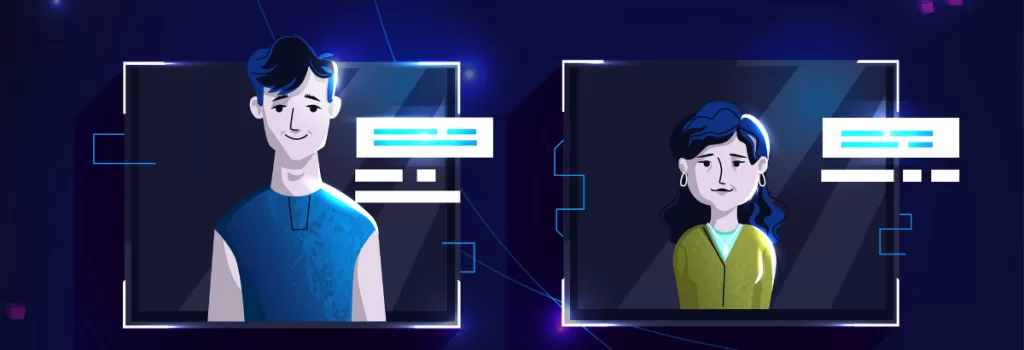
AI-powered hyper-personalization now dominates B2B video campaigns, with dynamically tailored content based on viewer characteristics and behaviors. Forward-thinking organizations are beginning to implement VSL variations automatically customized based on:
- Viewer industry
- Company size indicators
- Traffic source
- Previous website behavior
- Geographic location
Such personalization technologies, while currently premium investments, will likely become accessible to mid-market Indian enterprises within 2-3 years.
Interactive VSL Experiences
Interactive video experiences with clickable elements, in-video forms, and branching narratives now enable viewers to customize their experience based on interests. B2B applications include:
- Role-specific content paths (CFO focus vs. CTO focus vs. Operations focus)
- Industry-specific case study selection
- Technical depth customization
- Direct meeting scheduling without page navigation
Integration with Conversational AI
Emerging implementations couple VSLs with chatbot interfaces enabling immediate question response while maintaining the engagement benefits of video presentation. Such hybrid approaches may prove particularly effective for Indian markets where immediate, personalized response expectations continue rising.
Use VSLs as Leverage, Not Content
A Video Sales Letter transcends traditional content categorization. Properly constructed, the VSL functions as leverage, a force multiplier enabling founders to maintain presence across numerous simultaneous prospect interactions without physical presence requirements.

Within India’s increasingly competitive B2B landscape, where buyers conduct 70% of research independently before engaging sales representatives, organizations delivering clear, consistent, authoritative value communication achieve disproportionate competitive advantage.
The opportunity proves particularly pronounced for enterprises targeting India’s expanding tier-2 and tier-3 markets, where regional language VSLs, culturally contextual messaging, and authentic founder expertise create differentiation in markets often underserved by larger competitors.
VSLs represent neither trend nor experimental tactic. They constitute essential infrastructure for scalable B2B growth in an environment where buyer preferences, technological capabilities, and competitive intensity converge to reward organizations communicating value with clarity, consistency, and cultural intelligence.
FAQs
What is the difference between a Video Sales Letter (VSL) and a Webinar, and which one is better for B2B lead generation?
While both formats use video to sell, they serve different stages of the funnel. A VSL is typically shorter (3–10 minutes), pre-recorded, and highly scripted. Its goal is to filter traffic and convert a stranger into a qualified lead (e.g., booking a demo). It works best for top-of-funnel traffic that has short attention spans. A Webinar is typically longer (30–60 minutes), often live (or simulated live), and focuses on deep education. It is better for “middle-of-funnel” leads who are already interested and willing to invest time to learn. The Verdict: Use a VSL on your landing pages to get the lead. Use a Webinar to nurture that lead if they aren’t ready to buy immediately.
Should I use AI Avatars (like HeyGen or Synthesia) to record my B2B VSL?
This is a trending topic in 2026. While AI avatars save time and money, they come with a “Trust Tax.” In high-stakes B2B sales (where deals are worth ₹5 Lakhs+), buyers are looking for human connection and accountability. If a prospect realizes the “Founder” talking to them is an AI generation, it can signal that the company is impersonal or “fake.” Best Practice: Use AI for internal training or low-stakes support videos. For the VSL, where the goal is to build deep trust, use a real human (preferably the Founder or Head of Sales), even if the production is imperfect. Authenticity converts better than artificial perfection.
How do I send a Video Sales Letter via email without triggering spam filters?
Video files are heavy. If you attach an MP4 file directly to a cold email, it will almost certainly land in the Spam folder.
The Strategy:
1. The Thumbnail Hack: Take a screenshot of your video (ideally with a “Play” button overlay).
2. The GIF: Even better, create a 3-second animated GIF of the video playing.
3. The Link: Embed that image in the email and link it to a distraction-free landing page where the video is hosted.
4. The Subject Line: Use the word “Video” in brackets, e.g., “Quick question [Video inside]”. Data shows this can increase open rates by 19%.
Why shouldn’t I just host my VSL on YouTube for free?
YouTube is designed to keep viewers on YouTube, not to sell your product.
The Distraction: At the end of a YouTube video, the platform displays “Suggested Videos”, often from your competitors or irrelevant entertainment. This steals your prospect’s attention right at the moment they should be clicking your “Book a Call” button.
The Data: YouTube analytics are vanity-focused (Views/Likes). Professional hosting platforms like Wistia, Vimeo, or Vidyard provide “Heatmaps” that show exactly which individual lead watched the video and where they dropped off, allowing your sales team to follow up with context.
How long should a B2B Video Sales Letter be?
There is no perfect length, but there is a perfect structure.
Cold Traffic (Ads/Social): Keep it under 3–5 minutes. These viewers have low intent; you need to hook them fast and sell the “Next Step” (the meeting), not the whole product.
Warm Traffic (Retargeting/Email List): Can be 10–20 minutes. If someone knows your brand and is considering a purchase, they will watch a longer, detailed explanation.
Rule of Thumb: The video should be exactly as long as it takes to cover the “Hook, Problem, Solution, and Proof”, and not a second longer.
Should I “gate” my VSL (require an email to watch it)?
In 2026, the trend is “Ungating.” B2B buyers are tired of filling out forms just to see if a company is relevant. If you gate the video, 70% of prospects will bounce. The Better Strategy: Make the VSL open and free to watch. This maximizes your “consumption rate.” Then, place the Call to Action (CTA) below the video or as a pop-up button that appears halfway through the video. You will get fewer leads, but they will be educated, high-intent leads who have actually consumed your message.
How do I measure the ROI of a VSL?
Do not look at “View Count.” In B2B, a video with 100 views can generate millions in revenue if those 100 views are from decision-makers.
Metrics that matter-
Play Rate: What percentage of page visitors clicked play? (Target: >30%).
Engagement Rate: Did they watch until the end? If most drop off at the 2-minute mark, your script is boring there.
Conversion Rate: What percentage of viewers clicked the “Book a Call” button? (Target: 5–15% for warm traffic).
Can I use a VSL if I sell a “boring” commodity like steel or logistics?
Absolutely you can use a VSL for a “boring” commodity like steel or logistics. In fact, VSLs work better in commoditized industries because most competitors are using static, boring websites.
The Angle: Don’t sell the commodity; sell the Process.
Wrong: “We sell high-quality steel.”
Right: “Here is our 5-step Quality Control protocol that ensures you never face a rejection on the assembly line.” By visualizing your process, you commoditize your competitors who are just selling on price.
What equipment do I need to record a professional VSL?
You do not need a studio. The “Raw” aesthetic is currently outperforming polished, cinematic ads in B2B because it feels more honest.
The Minimum Viable Setup:
Camera: A modern smartphone (iPhone 14/15 or Samsung S23/24) or a good webcam (Logitech Brio).
Audio: This is non-negotiable. Use a Lapel Mic (like Boya or Rode) to ensure crisp sound. Bad audio destroys trust.
Lighting: Face a window (natural light) or buy a simple softbox light.
Teleprompter: Use a teleprompter app on your phone/laptop so you don’t look down at your notes. Eye contact is critical for trust.
How do I A/B test a Video Sales Letter?
Testing the entire video is expensive. Instead, test the first 60 seconds (The Hook). The Method:
Record one core video (Problem + Solution + Offer).
Record three different intros (Hooks).
Hook A: Focus on Fear (e.g., “Are you losing money on…?”)
Hook B: Focus on Gain (e.g., “Here is how to double your…”)
Hook C: Focus on Curiosity (e.g., “The #1 mistake most founders make…”)
Run traffic to all three versions. The one with the highest “retention rate” past the 1-minute mark is your winner. Then, scale that version.

2 thoughts on “How to Make Video Sales Letters for B2B SMEs”