
B2B sales in India won’t be won by chai meetings and brochures in 2026. Buyers will shortlist vendors using AI, review content before taking calls, and decide in groups where one hidden veto can kill the deal. The old relationship-first playbook still matters, but it no longer carries the full weight. This guide lays out five moves that help Indian B2B brands build trust before the meeting, align the entire buying group, and close deals in the era of the Invisible Sale.
If you walked into a B2B sales meeting in Mumbai or Delhi five years ago, the strategy was simple: Show up, show the brochure, drink the chai, and wait for the LPO (Local Purchase Order).
The game was played on Relationship Capital. If the Purchase Manager liked you, you got the deal.
Fast forward to the dawn of 2026. The game hasn't just changed; the entire board has been flipped over.
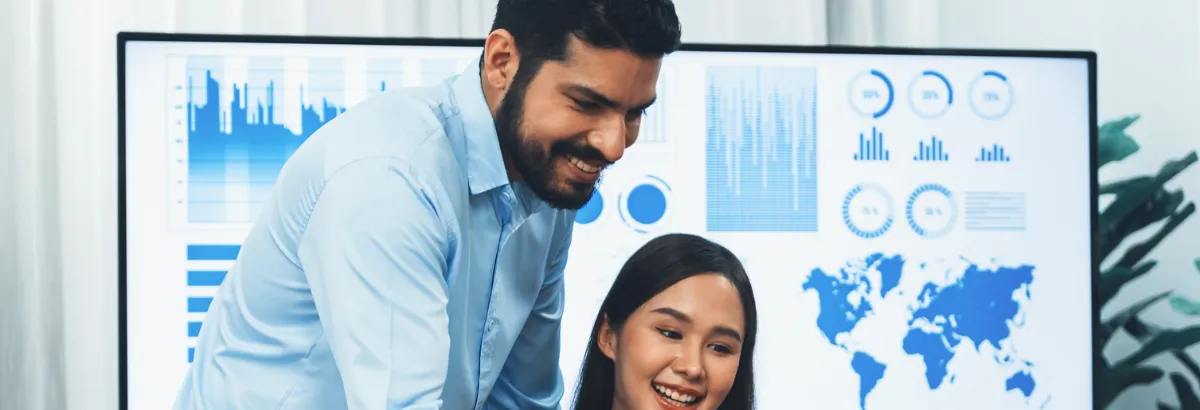
Today, that same Purchase Manager is using an AI agent to scan 50 vendors in seconds. The decision isn't being made by one person over tea; it is being made by a "Buying Committee" of eight people (half of whom you will never meet) based on data you didn't even know they had.
Is B2B marketing and B2B sales in India changing?

Yes. We are entering the era of the Invisible Sale.
This is the new reality of B2B sales in India in 2026.
In India, we are seeing a massive shift. The "Chalta Hai" attitude to marketing data is dying. The reliance on pure "face value" is fading. If you are an Indian SME Founder or Marketing Head, you are likely feeling a specific kind of anxiety right now: The old ways aren't working, and the new ways feel like science fiction. That tension is showing up in every pipeline conversation across B2B sales in India.
But here is the good news: The fundamental rules of human trust haven't changed. They have just moved to a new battlefield.
Based on deep market observations across the APAC and Indian landscape, here are the 5 Strategic Moves you must make to win in 2026. These five moves are built specifically for B2B sales in India, where trust and internal buy-in decide the deal.
Move #1: Story Marketing Matters for B2B Sales in India
Open Google and search for "Logistics Company in India." You will find 10,000 companies. They all say the same thing: "On-time delivery," "Cost-effective," "End-to-end solutions."
It is a sea of sameness.
| Prediction: In 2026, the brands that win won't be the ones with the best features. They will be the ones with the Clearest Story. |
The Problem: By the time a buying group in India reaches out to you, they are 70% through their decision process. They have already shortlisted three vendors. If your website looks like everyone else's, you aren't even on the list.
Your Action Plan:
- Kill the Jargon: Go to your homepage. If you see words like "Synergy," "Paradigm," or "World-Class," delete them.
- Define Your "Only" Statement: "We are the only HR software designed specifically for Indian factory labor compliance." (Specific > Better).
- Build a "Proof Layer": Indian buyers are cynical. They don't believe your claims. They believe evidence. Don't just say "We are fast." Show a timestamped video of your dispatch process.
Move #2: Clean Your Data Before You Hire AI Agents

Everyone around the globe are talking about "AI Agents" and "Autonomous Revenue Engines." They want an AI sales bot that can negotiate deals while they sleep.
But here is the dirty secret of B2B SMEs: Our data is a mess.
- Customer names are duplicated in the CRM.
- Emails are missing.
- The "Deal Value" field is empty.
If you put a Ferrari engine (AI) into a bullock cart (Bad Data), you don't get a fast cart. You get a broken cart.
| Prediction: In 2026, the winners won't be the ones with the fanciest AI. They will be the ones who fixed their boring data plumbing in 2025 (or at least start of 2026) |
Your Action Plan:
- Audit Your CRM: Before you buy another AI tool, hire an intern to clean your Excel sheets. Merge duplicates. Standardize inputs.
- Focus on "boring" AI Use Cases: Don't try to build an autonomous sales agent yet. Use AI for the simple stuff first:
- Auto-tagging incoming leads.
- Summarizing sales calls.
- Drafting RFP responses.
- The "AI-Inside" Label: Be transparent. If your product uses AI, tell your clients exactly how. "We use AI to route your shipment, not to spy on your data." Trust is fragile.
Move #3: Win Deals When Multiple Decision Makers are Involved
In the West, they talk about "Buying Committees." In India, we have something more complex: The Corporate Joint Family.
You aren't just selling to the CTO. You are selling to:
- The CTO (Who wants features).
- The CFO (Who hates spending).
- The Founder (Who trusts his gut).
- The Founder’s Son/Daughter (Who just returned from the US and wants "Digital Transformation").
- The "Uncle" Consultant (Who advises the board).
If you only pitch to one, the others will veto you.
| Prediction: In 2026, "Lead Generation" will die. "Account Orchestration" (winning the whole family) will rule. |
Your Action Plan:
- Map the Table: For every big deal, draw a family tree. Who is the "Shakuni" (the detractor)? Who is the "Arjuna" (the champion)?
- Create Role-Based Content:
- For the CFO: A one-page "Defensibility Pack" proving financial safety.
- For the CTO: A technical deep-dive video.
- For the Founder: A vision document about legacy and growth.
- Stop chasing MQLs (Marketing Qualified Leads): Start chasing MQA (Marketing Qualified Accounts). If three people from "Company X" visit your site, that is a signal. Go after the account, not the person.
Move #4: Thought Leaders & SMEs are the Business’ Biggest Asset
When you are sick, do you want to talk to the hospital's PR team? No. You want to talk to the Doctor. In B2B, your clients have a "Business Disease." They want the Doctor (Your Expert), not the Brochure.
We are drowning in AI-generated content. LinkedIn is full of generic "5 Tips to Grow" posts written by ChatGPT. As a result, buyers are starving for Real Human Expertise.
| Prediction: In 2026, your "Subject Matter Experts" (SMEs) will be your biggest marketing asset. The brands that win will be the ones who put their technical staff on camera. B2B sales in India depend heavily on buyers trusting faces faster than brochures. |
Your Action Plan:
- Identify your Internal Gurus: Who in your company answers the toughest technical questions? Is it your Head of Product? Your Supply Chain Lead?
- The "Unfiltered" Video Series: Put them in front of a camera. Ask them a hard question. "Why do most ERP implementations fail?" Let them answer honestly. No script.
- Amplify with AI: Use AI to take that video and turn it into 10 LinkedIn posts, a blog, and a newsletter. But the source material must be human.
Move #5: Partner Strategically with Marketing Agencies
Traditionally, Indian SMEs treat agencies like "Vendors." "I need a logo. Make it bigger. Do it for cheap."
This model is breaking. The complexity of modern B2B marketing (AI + Content + ABM + Tech Stack) is too high for a transactional relationship. You cannot pay someone per-post and expect them to build a revenue engine.
| The Prediction: In 2026, the smartest Indian companies will stop hiring "Digital Marketing Agencies" and start building strategic growth partnerships. |
Your Action Plan:
- Demand a Point of View: If your agency agrees with everything you say, fire them. You need a partner who challenges you. "Sir, I think this strategy is wrong because..."
- Share the Data: Give your agency access to your Sales Data, not just your Google Analytics. If they don't know your revenue targets, they can't help you hit them.
- Invest in "Discovery": Pay your agency to do deep research on your customers before they make a single creative asset. The strategy phase is worth more than the execution phase.
Be a B2B Thought Leader to Build Clarity and Trust
The year 2026 will be noisy.
- More AI content.
- More competitors.
- More confusion.
In a storm, the lighthouse doesn't compete with the waves. It just stands still and shines a clear light.
Your job as a B2B leader is to be that Lighthouse.
- Clear Story.
- Clean Data.
- Orchestrated Team.
- Real Experts.
- Strategic Partners.
If you can do this, you won't just survive the "Invisible Sale." You will control it.
Ready to build your 2026 Lighthouse?
Let’s clear the fogHootbox Media Works
Great Story Marketing for Great B2B SMEs
FAQs
1. What is the "Invisible Sale"?
The "Invisible Sale" refers to the 70-80% of the B2B buying journey that happens before a vendor is ever contacted. In 2026, buyers conduct deep research via AI summaries, peer communities, and review platforms without filling out forms. If your brand does not appear in this "invisible" research phase, you lose the deal before you even know it existed.
2. What is "Dark Social" in B2B?
"Dark Social" describes the private channels where B2B decisions are actually influenced, WhatsApp groups, Slack communities, and direct messages (DMs), which tracking software cannot see. Unlike a public LinkedIn like, a "Dark Social" share (e.g., a CEO forwarding your PDF to a CFO on WhatsApp) is a stronger signal of intent, even though it is impossible to track on a dashboard.
3. What is "Zero-Click" content strategy?
A "Zero-Click" strategy is the practice of giving away your best insights directly on a platform (like LinkedIn or Google AI Overviews) without forcing the user to click a link to your website. In 2026, algorithms penalize external links, so the goal is to build influence and trust right inside the feed, rather than just chasing website traffic.
4. Will AI agents replace sales teams?
AI agents will not replace human sales teams, but they will replace administrative sales tasks. In 2026, AI agents handle prospecting, scheduling, and data entry, while human sellers focus exclusively on "high-trust" activities like negotiation and relationship building. The winning model is not "AI only," but a "Cyborg" approach where humans are powered by AI efficiency.
5. What is Account-Based Marketing (ABM)?
Account-Based Marketing (ABM) is a strategy where you treat individual high-value client accounts as a market of one. Instead of casting a wide net to catch "anyone," you align marketing and sales to target specific companies (e.g., "We want to close Tata Motors") with hyper-personalized content and outreach designed specifically for their stakeholders.
6. What is the difference: MQL vs MQA?
An MQL (Marketing Qualified Lead) is a single person who downloaded a brochure. An MQA (Marketing Qualified Account) is when multiple people from the same company engage with you (e.g., The CFO, CTO, and Manager all visit your site). In complex B2B sales, MQA is a much more accurate predictor of a deal than a single MQL.
7. Is LinkedIn still effective for B2B?
Yes, but the strategy has changed. In 2026, using LinkedIn as a "broadcast channel" for corporate brochures is dead. It is now effective only for "Founder-Led" and "Expert-Led" content. Buyers engage with personal profiles of founders and engineers who share real experiences, rather than corporate pages posting generic updates.
8. Why are B2B sales cycles getting longer?
Sales cycles are lengthening because of "Decision Paralysis" and larger "Buying Committees." In India, the average buying group has grown from 3 people to 8+ people. With more stakeholders involved, each with veto power, decisions take longer as the group tries to reach a consensus and avoid risk.
9. What is "Founder-Led Sales"?
Founder-Led Sales is a strategy where the company founder uses their personal brand and reputation to open doors and close major deals. In an era of AI noise, buyers trust a Founder's face and voice more than a faceless brand. It involves the Founder being active on social media and present in high-stakes closing meetings to provide the ultimate "trust signal."
10. How to budget for B2B content?
In 2026, stop budgeting for "volume" (e.g., 20 blogs a month) and start budgeting for "depth." Invest in video production, original research reports, and Subject Matter Expert interviews. One high-quality "trust asset" (like a detailed case study video) that helps close a deal is worth more than 50 generic SEO blog posts that no one reads.

1 thought on “How to Close B2B Sales in India?”