Most B2B videos in India look professional, but they don’t get remembered. They show factories, features, and “leading provider” lines, yet they fail to gain buyers’ attention because nothing makes them feel anything. This article shows how Bollywood-style cinematic storytelling can make complex B2B offers feel simple, human, and hard to ignore. It breaks down 7 familiar film archetypes and turns them into plug-and-play video formats that build trust, emotion, and recall.
While the Indian B2B video landscape is characterized by high production values, it suffers from a significant deficit in brand recall. Content is often saturated with generic imagery - infrastructure, technical features, and 'market leader' rhetoric, which fails to pierce the cognitive noise or forge an emotional connection with the buyer. This article proposes a paradigm shift: leveraging the narrative power of Bollywood-style cinema to humanize complex business propositions. By decoding seven classic film archetypes into strategic, plug-and-play video frameworks, we demonstrate how brands can drive trust, resonance, and long-term memory.
I am going to address the elephant in the Indian B2B room.
Most B2B videos in India are boring.
We’ve all seen them. The drone shot of the factory in Gujarat. The slow-motion handshake in the boardroom. The Founder reading a script off a teleprompter, sounding like he’s reading a legal notice. And the inevitable voiceover that says: "We are a leading provider of end-to-end solutions with a commitment to quality and excellence."
It’s efficient. It’s professional. And it is completely forgettable.
That is why most B2B videos in India get watched for 3 seconds and ignored.
Logic makes people think but emotion makes people act. In India, we are wired for stories that drive emotion. We grew up on the Mahabharata, Panchatantra, and yes, Sholay. We remember characters. We remember struggle. We remember victory. So why, when we sell software or industrial pumps, do we suddenly become robots?
At Hootbox Media Works, we believe that B2B doesn't mean "Boring-to-Boring." It means Business-to-Business, and businesses are run by humans who are stressed, ambitious, and looking for a hero to save their day. If you want your brand to be trusted and chosen, stop making "Corporate Videos" and start filming "Blockbusters."
Here are 7 Bollywood Archetypes adapted for B2B that prove you can sell complex products without putting your audience to sleep or burning a hole in your pocket.
1. The “Lagaan” Spirit (The Underdog Victory)
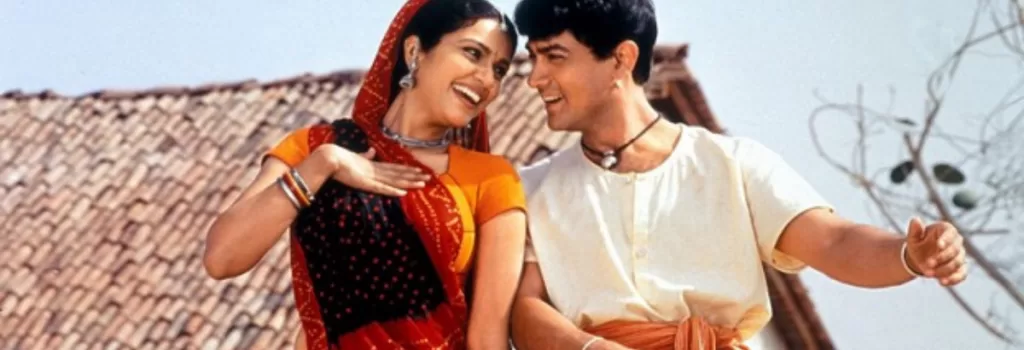
Ref: www.eastman.org
Think of Bhuvan’s team in Lagaan. A ragged group of villagers taking on the mighty British Empire. The odds are zero, but the spirit is 100.
Now, imagine you are an Indian logistics tech company pitching against a global giant like SAP or Oracle.
- Scene: A small textile exporter in Tirupur. He is stressed. A massive US contract is on the line, but the "Big Global Logistics Partner" has just told him the shipment is delayed due to a "system error." He is about to lose everything.
- The Turn: Enter Your Brand. You aren't the giant; you are the partner who is willing to go the extra mile to make the client feel that they are in safe hands.
- Why it works: Every Indian SME feels like the underdog fighting global giants. When you help them win, the shared victory builds the kind of loyalty that no contract can buy.
2. The “Swades” Effect (Rooted Empowerment)
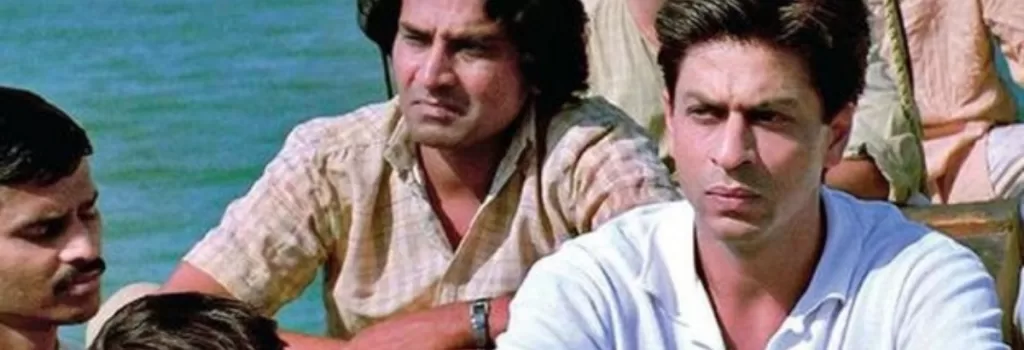
Ref: www.thehindu.com
Think of Shah Rukh Khan in Swades, lighting that first bulb in the village. It wasn’t about electricity; it was about dignity and progress.
Now, use this if you sell fintech or SaaS to non-metro India.
- Scene: A distributor in a Tier-2 city like Nashik. It’s Sunday. His friends are playing cricket, but he is stuck in his dark office, surrounded by piles of paper invoices, manually entering GST data. He looks tired. He is missing his son's childhood.
- The Solution: Your software doesn't just "automate billing." It turns the lights on. Show him clicking one button on his phone, the work finishing in seconds, and him walking out into the sunlight to join the cricket match.
- Why it works: You aren't selling software; you are selling freedom from drudgery.
3. The “Gabbar Singh” Threat (The Shared Villain)

Ref: https://www.hindustantimes.com/
Sholay works because we all fear Gabbar. The fear unifies the village.
Use this for Compliance, Tax, or Legal Tech.
- Scene: Personify the "GST Notice" or the "Server Crash" as the villain. Don't show a computer screen. Show the villain as a shadow looming over the Founder’s desk. The music is tense. The Founder is sweating. The villain laughs, "One wrong entry, and I will freeze your bank account!"
- The Hero: Your product enters like Jai and Veeru. You provide the shield (The Audit Protection Tool) that makes the villain shrink and vanish.
- Why it works: A shared enemy builds instant camaraderie. "You hate this problem? We hate it too. Let’s kill it together."
4. The “Bhaag Milkha” Grind (The Relentless Pursuit)

Ref: https://www.hindustantimes.com/
Bhaag Milkha Bhaag. The sweat, the training, the vomit, the absolute refusal to give up until Gold is won.
Now, use this for Manufacturing or Industrial Excellence.
- Scene: Don't show the finished product in a shiny showroom. Show the factory floor. Show the engineers sweating over a blueprint at midnight. Show the failures. Show the rejection. Show the "Obsession with Quality."
- The Climax: The machine finally works perfectly. The customer smiles.
- Why it works: Indians respect hard work. Show the grind behind your product, and they will trust the quality of your product.
5. The “Munna Bhai” Simplification (The Jadoo Ki Jhappi)
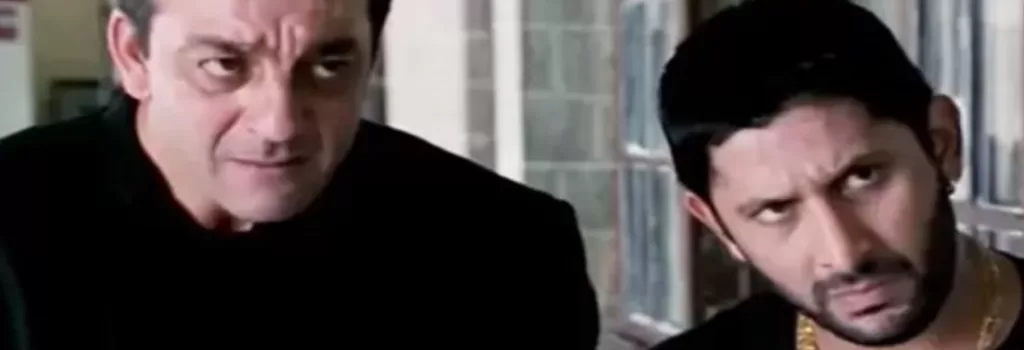
Ref: https://www.thestatesman.com/
Munna Bhai M.B.B.S. explained complex medical life-and-death situations with simple street metaphors and a hug.
Use this for complex Tech (Cloud Security, AI, Blockchain).
- Scene: A confused classic Indian businessman (The "Sethji") asks, "Beta, what is this Cloud-Woud?"
- The Metaphor: Don't talk about servers. Tell a story about a Jeweller. "Uncle, if you keep gold in the shop, thieves can take it. If you keep it in the Bank Locker, it is safe, and you can access it from any branch."
- The Pitch: "Our Cloud Backup is your Bank Locker."
- Why it works: Metaphors bypass the "technical brain" and go straight to the "common sense brain."
6. The “Chak De” Coach (The Expert Guide)
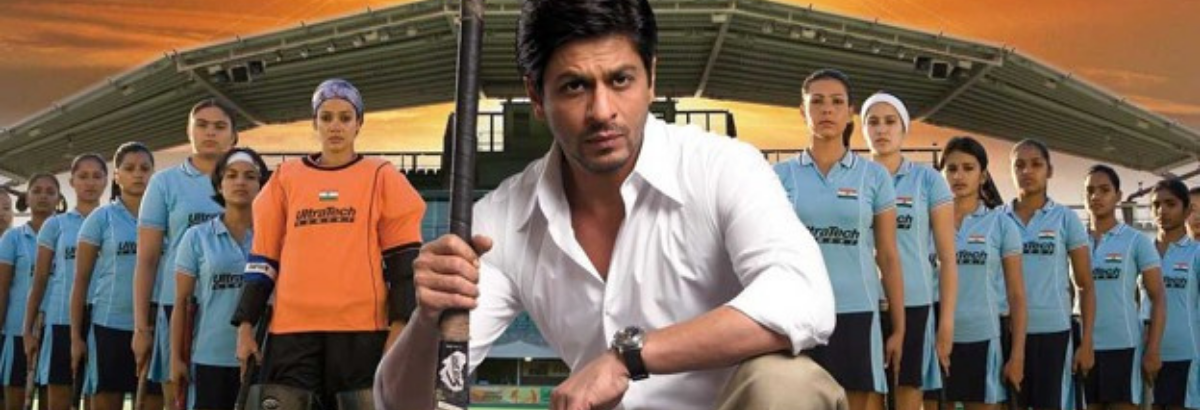
Ref: https://oopar.club/
Kabir Khan in Chak De! India. He was tough, he was misunderstood, but he was the only one who could take a broken team to the World Cup.
Use this for Consulting or HR Services.
- Scene: A boardroom in chaos. Sales are down, people are arguing, the "Team India" is fighting amongst themselves.
- The Entry: You (The Consultant) walk in. You don't bring a PowerPoint; you bring a mirror. You ask the hard questions. You unite the team. You show the training montage.
- The Win: The company turns around. The CEO hands you the trophy (the renewed contract).
- Why it works: It positions you as an Authority without you having to say "We are experts." Your actions in the story prove it.
7. The “Drishyam” Defense (The Ultimate Safety)

Ref: https://www.indiatvnews.com/
Ajay Devgn in Drishyam. A man who has thought of everything. He protects his family by covering every single track. He is always ten steps ahead.
Use this for Cybersecurity or Insurance.
- Scene: The "Police" (A Cyber Attack or Data Breach) is banging on the door. Panic everywhere. Other companies are getting arrested (hacked).
- The Twist: The hacker enters your client’s server... and finds nothing. Because you were there two days ago. You encrypted the data. You created the backup. The family is eating dinner peacefully, unaware of the danger that passed them by.
- Why it works: Fear is a potent motivator, but "Peace of Mind" is the ultimate product.
The Anatomy of a Great Indian B2B SME Story
At Hootbox, we use a simple framework to build these stories for our clients. We call it the "Cinematic B2B Framework":
- The Hero: Your Client (The struggling Founder, the stressed Manager).
- The Villain: The Business Problem (GST, Downtime, Competition).
- The Item Number: The "Wow" moment where your solution works like magic.
- The Happy Ending: The Client succeeds and gets the credit.
Why “Indianizing” the Story Matters
You cannot copy-paste a Western storytelling style into the Indian market. Western B2B is often cool, detached, and minimalist. Indian B2B is warm, chaotic, and relationship-driven. Your videos need to reflect the reality of Indian business - the traffic, the negotiations, the chai, the family pressure, and the relentless drive to grow.
Your Action Plan
You don't need a Yash Raj Films budget to start. Try this today: Take your phone. Record a 60-second video for LinkedIn. But don't pitch your product. Tell us about a "Chak De" moment, a time a client was losing, and you helped them win.
- What was the score? (The problem)
- What was the strategy? (Your solution)
- How did they celebrate? (The result)
That’s it. That’s a story.
If you want our expert guidance in creating these stories and also turning them into a system that attracts the right buyers while you sleep… well, that’s where we come in.
let's Script your storyHootbox Media Works
Great Story Marketing for Great B2B SMEs
FAQs
1. Is it necessary to have a "Hero" character in every B2B marketing video?
Yes, every effective B2B marketing video requires a "Hero" character to anchor the narrative, but that Hero should never be your brand. In a proper story framework, the client (the user facing the problem) is the Hero, and your product is the Guide or Tool that helps them succeed. If you make your brand the Hero, the audience disconnects; if you make the client the Hero, they see themselves in the story and are more likely to convert.
2. What is the ideal length for a B2B sales video on LinkedIn?
The ideal length for a B2B sales video on LinkedIn is between 60 to 90 seconds. Data shows that decision-makers have short attention spans on social feeds. A 60-second video is long enough to establish a problem and solution, but short enough to be consumed during a quick break. If you need to cover deep technical details, use a short "hook" video to drive traffic to a longer demo or webinar on your website.
3. How can a B2B company measure the ROI of video marketing beyond just view counts?
To measure the true ROI of B2B video marketing, companies should look beyond "views" and track "consumption rates" and "pipeline influence." A high view count is vanity; a high completion rate (people watching until the end) indicates strong intent. Additionally, tracking how many closed deals interacted with your video content (using attribution tools) proves that video is actually helping to shorten sales cycles, not just generating noise.
4. Should B2B companies prioritize high-production value or authenticity in their videos?
In 2026, B2B buyers prioritize authenticity over high production value. While audio and lighting must be clear, a "slick" over-produced commercial often feels like a generic ad and is ignored. Conversely, a raw, unscripted video of a Founder or Engineer sharing genuine insights (even if shot on a webcam) often builds more trust because it feels like honest advice rather than a rehearsed sales pitch.
5. What is the difference between a "Brand Video" and a "Product Demo" video?
A "Brand Video" sells the Why, while a "Product Demo" sells the How. A Brand Video is top-of-funnel content designed to evoke emotion and align with the buyer's values (e.g., "We believe in safer factories"). A Product Demo is bottom-of-funnel content that shows the specific features and interface (e.g., "Here is how to click 'Generate Report'"). You need both to move a prospect from "Interested" to "Sold."
6. Can we use AI avatars for B2B videos in India, or do we need real humans?
While AI avatars are efficient for internal training or quick updates, client-facing B2B videos should feature real humans whenever possible. B2B sales are built on trust, and buyers (especially in high-stakes deals) need to see the actual people behind the product. Using a real Founder or Subject Matter Expert on camera acts as a powerful "trust signal" that a synthetic avatar cannot replicate.
7. How can we use video for "Account-Based Marketing" (ABM) campaigns?
Video is a powerful tool for Account-Based Marketing (ABM) when it is hyper-personalized. Instead of sending a generic link, a sales rep can record a 30-second personal video addressing a specific prospect by name ("Hey John, I saw your report on Q3 logistics…"). These 1:1 videos have significantly higher open and response rates than text emails because they prove you have done your research and are not a bot.
8. What is the best way to distribute B2B videos in India digitally to ensure decision-makers actually see them?
The best distribution strategy for B2B video is "Multi-Channel Repurposing." Do not just post a YouTube link once. Upload the native video file directly to LinkedIn for the feed algorithm, embed it in your email newsletters for your subscriber list, and send it via direct message (DM) to high-value prospects. You must place the video where the buyer already spends their time, rather than expecting them to come to your channel.
9. Do B2B videos really need captions/subtitles?
Yes, captions are non-negotiable for B2B videos because 85% of social media video is consumed with the sound off. Executives often scroll through LinkedIn during meetings, commutes, or in quiet offices. If your video relies solely on audio to convey the message, you will lose the vast majority of your audience instantly. Captions ensure your value proposition is read even if it isn't heard.
10. What is a "Customer Testimonial Video," and why is it better than a written case study?
A "Customer Testimonial Video" is a recording of a happy client explaining how your product solved their problem. It is far more effective than a written case study because it captures non-verbal cues, the genuine relief in their voice, the smile when they talk about the results. These emotional signals validate your claims and provide "Social Proof" that is much harder to fake than a text quote on a website.