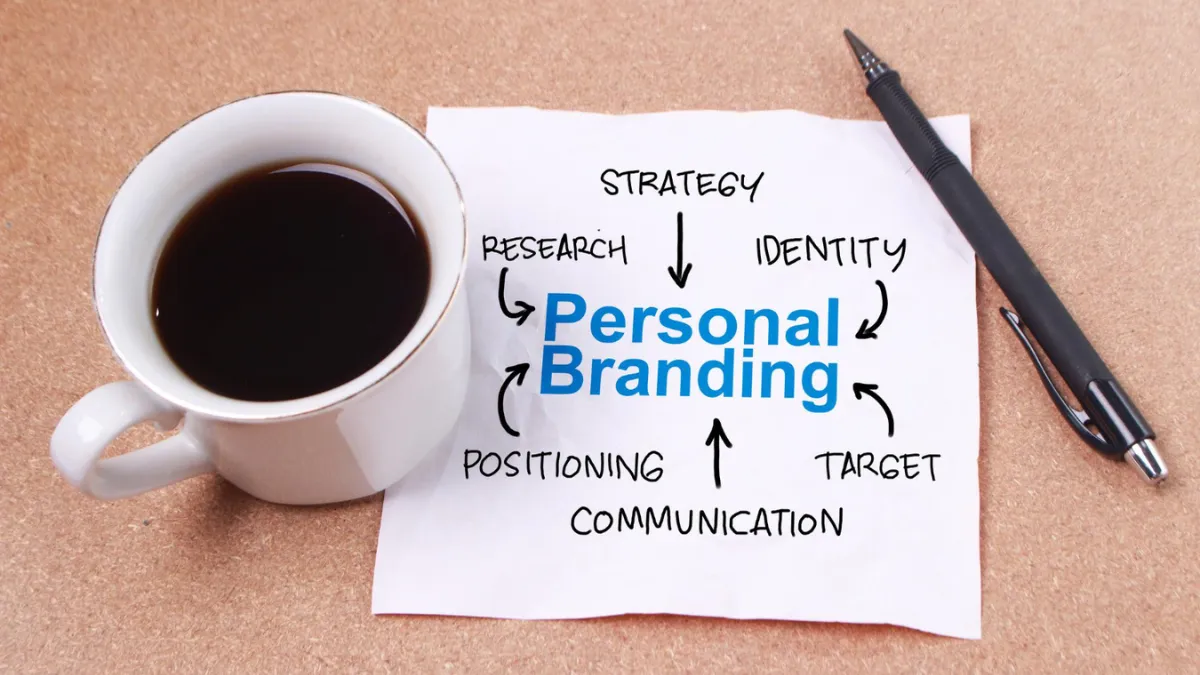
In the competitive landscape of 2026, the era of the “faceless corporation” is effectively over. B2B buyers, investors, and top-tier talent are no longer satisfied with interacting with logos; they demand to know the humans behind the enterprise. For SME Founders and CEOs, personal branding has transitioned from a vanity project to a critical revenue driver.
This comprehensive article explores the strategic necessity of personal branding for B2B leaders. It provides a blueprint for transforming individual reputation into organizational equity, covering content strategies, time management for busy executives, and the metrics that prove ROI.
If you’re a B2B SME leader ready to be the face of your brand, we can help. Let’s talk.
Why is personal branding essential for B2B founders in 2026?
A significant shift has occurred in the way business-to-business purchasing decisions are made. Historically, a company’s reputation, longevity, and list of assets were sufficient to secure trust. Today, trust has migrated from institutions to individuals. In an environment saturated with AI-generated content and indistinguishable corporate messaging, the human voice of the founder has become the most potent differentiator.

For an SME leader, personal branding for B2B is not about becoming an influencer or chasing viral fame. It is about reputation management at scale. It is the strategic process of curating your expertise, values, and vision to build authority in your specific niche. When a CEO actively shares insights, they humanize the business. This humanization lowers the barrier to entry for sales teams.
Consider the psychology of a modern buyer. Before they request a demo or sign a contract, they research the leadership team on LinkedIn. If they find a blank profile or a dormant account, they perceive a lack of innovation or engagement. Conversely, if they find a leader who articulates industry trends and shares valuable problem-solving advice, they perceive competence. The founder’s brand acts as a trust anchor, validating the company’s claims and shortening the sales cycle.
How does personal branding drive tangible business revenue?
The correlation between a founder’s visibility and the company’s bottom line is direct and measurable. Personal branding for B2B serves as a high-leverage lead generation channel. When a CEO consistently addresses the pain points of their target audience, they attract inbound interest from qualified prospects who are already sold on the founder’s expertise.

This dynamic flips the traditional sales model. Instead of sales representatives chasing cold leads, the founder attracts warm leads who are seeking specific guidance. Furthermore, a strong personal brand allows the company to command premium pricing. Experts are paid for their insight; vendors are paid for their commodities. By positioning yourself as a thought leader rather than just a business owner, you elevate your company from a commodity provider to a strategic partner.
Beyond direct revenue, a strong founder brand reduces recruitment costs. Top talent wants to work for visionary leaders. A CEO who publicly champions their team and articulates a compelling vision attracts high-quality candidates who align with that culture, reducing the reliance on expensive recruitment agencies.
What is the strategic framework for a founder’s personal brand?
Building a personal brand requires a strategic foundation, not just random posting. The most effective framework for personal branding for B2B is to position the founder as the “Guide” rather than the “Hero.”
Many founders make the mistake of using their platform to boast about achievements. While credibility is important, the most effective brands are built on helpfulness. The strategy should focus on solving the specific problems of the target customer. If you run a logistics company, your brand shouldn’t just be about your trucks; it should be about supply chain resilience, cost optimization, and navigating customs regulations.
Your personal brand strategy must answer three questions:
- Who exactly am I trying to help?
- What specific problem can I solve for them through my content?
- What unique perspective or philosophy do I bring to this problem?
By strictly adhering to these pillars, you ensure that every piece of content you produce reinforces your utility to the market. This discipline prevents the brand from becoming a vanity project and keeps it focused on business objectives.
How do I define my unique brand voice?
In a crowded digital space, a distinct voice is your competitive advantage. Most corporate content is sterile, safe, and indistinguishable. To succeed in personal branding for B2B, a founder must have the courage to be distinct.

Your voice should reflect your actual personality and leadership style. Are you the “Data-Driven Realist” who relies on hard numbers to debunk industry myths? Are you the “Empathetic Mentor” who focuses on culture and soft skills? Are you the “Visionary Futurist” who predicts where the market is going next?
Defining this archetype helps in content creation. It acts as a filter. If you are the “Data-Driven Realist,” you avoid fluff pieces and focus on charts, trends, and analysis. Consistency in this voice builds familiarity. The audience should be able to read a post without seeing your name and recognize that it came from you. This consistency is what transforms a casual reader into a loyal follower.
What type of content should B2B CEOs post?
The content strategy for a B2B leader should be a balanced mix of professional insight and human connection. We recommend a “3-Pillar” approach to ensure variety while maintaining authority.
1. Industry Expertise (The Teacher) This is the core of personal branding for B2B. These posts address the technical challenges your clients face. It could be a commentary on a new regulation, a breakdown of a complex process, or a prediction about market shifts. This content proves you know your subject matter deeply.
2. Company Culture (The Leader) These posts show how you lead. Highlighting employee wins, sharing photos from the office, or discussing your hiring philosophy humanizes the brand. It proves that you are building a real company with real people, not just a digital facade. This is particularly effective for attracting talent and investors.
3. Personal Philosophy (The Human) These posts share the “why” behind what you do. It could be a lesson learned from a failure, a book that changed your thinking, or a habit that improves your productivity. While these should remain professional, they allow the audience to connect with your values.
How do I optimize my LinkedIn profile for business impact?
For B2B founders, LinkedIn is the new company website. It is often the first landing page a prospect visits. Optimizing your profile is the first step in effective personal branding for B2B.
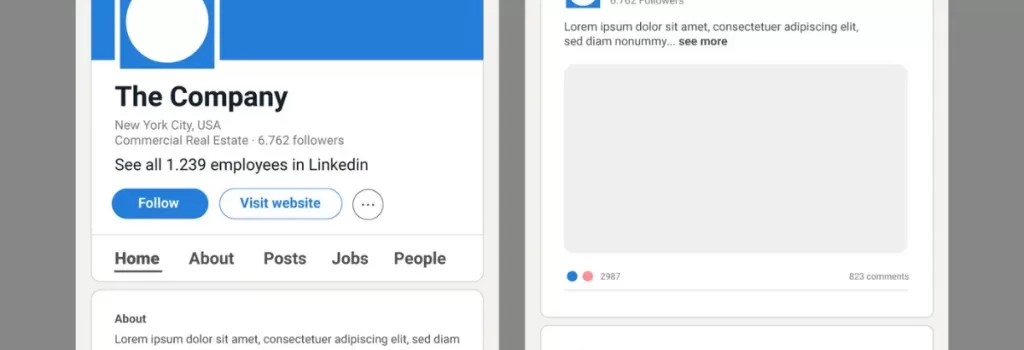
The Headline: Stop using just your job title. “CEO at ABC Corp” tells the reader nothing about your value. Change it to a value proposition. For example: “Helping Manufacturing SMEs Reduce Downtime with IoT Solutions | CEO at ABC Corp.” This immediately qualifies you to the reader.
The Banner Image: Do not use the default grey background or a generic cityscape. Use this prime real estate to showcase social proof. A photo of you speaking at a conference, your team in action, or a simple text overlay of your company’s value proposition is far more effective.
The Featured Section: Treat this as your portfolio. Pin your best case study, a link to book a consultation, or your most high-performing article. This guides the visitor toward a conversion action immediately.
The About Section: Do not write a biography in the third person. Write a letter to your ideal client. Explain why you started this business, the problems you are obsessed with solving, and how you help. Make it personal and direct.
How can busy CEOs find time for personal branding?
The most common objection to personal branding for B2B is a lack of time. Founders are busy running operations and often feel they cannot spare hours for social media. However, consistency does not require hours of daily effort; it requires systems.
Batch Creation: Do not try to write posts every day. Set aside 90 minutes on a Friday afternoon or Sunday morning to draft content for the entire week. This “deep work” approach is far more efficient than context-switching daily.
The “Document, Don’t Create” Method: You do not need to invent new ideas. simply document what you are already doing. If you had an interesting meeting with a client, write about the problem they faced. If you solved an operational issue, write about the solution. Your daily life as a CEO is full of content; you simply need to capture it.
Audio Notes: If writing is a bottleneck, record voice notes of your thoughts and have a junior team member or freelancer transcribe and format them. Your unique perspective is the asset; the typing is just administrative work.
How do I overcome the Imposter Syndrome of posting online?
Many accomplished CEOs hesitate to post because they fear judgment or feel they have nothing new to say. This “Imposter Syndrome” is the biggest psychological barrier to personal branding for B2B.

To overcome this, reframe your role. You are not trying to be the world’s leading guru; you are simply sharing your specific experience. No one can dispute your experience. If you share a lesson you learned from losing a deal, that is your truth. It provides value to others who might face the same situation.
Also, realize that the “experts” you admire often know less than you do about your specific niche. Your daily operational reality gives you a granular understanding of the market that high-level theorists lack. Lean into that specificity. Specificity breeds confidence and authority.
How does founder branding impact employee morale?
A founder’s personal brand has a profound internal impact. When employees see their CEO articulating the company’s vision and winning respect in the market, it builds internal pride. It validates that they are working for a leader who is a recognized player in the industry.
Furthermore, personal branding for B2B allows the founder to publicly recognize the team. Tagging employees in posts, celebrating their work anniversaries, or sharing stories of their problem-solving sends a powerful message of appreciation. This public validation is often more motivating than private praise.
However, the founder must also encourage employees to build their own brands. A confident leader creates a “company of influencers.” When sales reps, engineers, and product managers also share content, the company’s footprint multiplies. The founder sets the standard, giving permission for the rest of the organization to be visible.
What are the common mistakes to avoid in personal branding?
The path to building a personal brand is filled with pitfalls that can damage reputation. The most common mistake in personal branding for B2B is being overly promotional. If every post ends with a sales pitch or a link to your product, the audience will tune out. The “Give to Ask” ratio should be at least 4:1. Give value four times before asking for anything.
Another mistake is inconsistency. Posting five times in one week and then vanishing for a month signals unreliability. In the algorithm-driven world, consistency is the primary metric of success. It is better to post twice a week every week than to be sporadic.
Finally, avoid inauthenticity. Do not try to mimic the style of famous influencers. If you are a serious, analytical person, do not try to be loud and entertaining. If you are naturally casual, do not try to be stiff and corporate. The audience can smell a performance. Be the most professional version of your actual self.
How do we measure the ROI of personal branding?
For a business leader, every activity must justify its cost. Measuring the ROI of personal branding for B2B requires looking beyond vanity metrics like “likes” or “followers.”
Inbound Lead Quality: Track how many leads mention finding you through your content. These leads typically close faster and have a higher lifetime value because trust is already established.
Speaking Invitations and Press: A strong personal brand leads to invitations to speak at industry conferences or quotes in the media. These opportunities have significant monetary value in terms of PR and networking.
Talent Acquisition Costs: Measure if the time to hire or the cost per hire decreases. A strong brand often attracts candidates organically, reducing the need for recruiters.
Network Expansion: Track the caliber of people accepting your connection requests. Are you now able to get meetings with decision-makers who previously ignored you? Access is a tangible form of ROI.
The First Step to Visibility
The decision to invest in personal branding for B2B is a decision to take control of your company’s narrative. It is the transition from being a passive participant in the market to an active shaper of opinion.

An invisible CEO is a liability in 2026. Your competitors are likely already building their digital presence, capturing the attention and trust of your potential clients. The best time to start building your brand was five years ago. The second best time is today.
Start small. Optimize your profile. Share one insight from your week. Engage with five prospects. Consistency will compound over time, turning your reputation into your business’s most valuable asset.
FAQs
Is it ethical to use a ghostwriter for my personal brand posts?
Using a ghostwriter is a standard and ethical practice in personal branding for B2B, provided the process is managed correctly. The key is that the thoughts, opinions, and stories must originate from the founder. A ghostwriter should act as an editor and amplifier, not an inventor. They interview the founder to capture their unique perspective and then format it for the platform. The ethical line is crossed only if the writer invents experiences the founder never had or opinions the founder does not hold. As long as the intellectual property belongs to the founder, ghostwriting is simply a time-efficiency tool for busy executives.
Should I post on my personal profile or the company page?
For maximum reach and engagement, you should prioritize posting on your personal profile. LinkedIn and other social algorithms heavily favor individual accounts over company pages because users prefer interacting with people, not logos. A personal post by a CEO often gets 10x the engagement of the exact same content shared on the company page. The strategy should be to build the audience on the personal profile and then use that attention to direct traffic to the company page for official announcements, job postings, or formal press releases.
How do I handle negative comments or trolls on my professional posts?
Handling negativity is a critical skill in personal branding for B2B. The rule of thumb is Don’t Feed the Trolls. If a comment is abusive or clearly intended to provoke, delete it and block the user; you have the right to curate your digital living room. However, if a comment is a respectful disagreement or a valid critique, engaging with it can actually boost your brand. Responding calmly, professionally, and with facts demonstrates leadership and emotional intelligence. It shows the audience that you are open to dialogue and confident in your position.
Do I need to share video content, or is text sufficient?
While text is still powerful, video content is rapidly becoming the most effective medium for building trust. Video allows the audience to see your body language, hear your tone, and gauge your passion, elements that are lost in text. You do not need high-production studio videos. Simple, selfie-style videos shot on a smartphone where you share a quick insight or tip are highly effective for personal branding for B2B. They feel authentic and approachable. If you are uncomfortable with video, start with text, but aim to incorporate video as you gain confidence.
How much of my personal life should I share to remain professional?
The goal is to be personal, not private. There is a distinct line. Sharing your hobbies, your morning routine, or a lesson learned from parenting helps humanize you and makes you relatable. This is beneficial. However, sharing intimate family drama, polarizing political rants, or unchecked emotional venting is unprofessional and can damage your business reputation. A good filter is to ask: “Does sharing this personal detail help my audience understand my values or leadership style better?” If the answer is yes, share it.
What if my employees leave after I help them build their personal brands?
This is a common fear, but the alternative, having a team of invisible, unengaged employees is worse. When you encourage personal branding for B2B among your team, you attract ambitious talent who want to work for a leader who supports their growth. While some may eventually leave, they often leave as brand ambassadors who refer business back to you. Furthermore, while they are with you, their amplified voices bring in more leads and awareness than if they remained silent. The net gain of having a visible, respected team far outweighs the risk of turnover.
How do I start networking on LinkedIn without being annoying?
The key to networking without being annoying is to avoid the Connect and Pitch tactic. Do not send a connection request followed immediately by a sales script. Instead, start by engaging with their content. Comment thoughtfully on their posts for a week or two. Then, send a connection request with a personalized note referencing something they wrote. Once connected, treat it like a real relationship. Ask questions, offer help, or share a relevant resource without asking for anything in return. Trust must be earned before a transaction can be proposed.
How long does it take to see results from personal branding efforts?
Personal branding is a compounding asset, not a quick fix. At Hootbox Media Works, we have seen soft results like increased profile views, connection requests from peers, and qualitative feedback in 3 to 6 months of consistent activity using our LinkedIn Trust Builder service. It typically takes 9 to 12 months to see significant hard results like a steady stream of inbound leads, speaking invitations, or press opportunities. Founders who quit after one month because they didn’t go viral are missing the point. The goal is to build a reputation that lasts for decades, which requires patience in the early stages.
Do I need to be on every social platform (Twitter, Instagram, LinkedIn)?
No. For personal branding for B2B, it is far better to dominate one platform than to be mediocre on four. For 99% of B2B founders, LinkedIn is the primary platform where the decision-makers and investors reside. Focus all your energy on mastering LinkedIn first. Only expand to Twitter (X) or YouTube if you have the bandwidth and if your specific audience is active there. Spreading yourself too thin leads to burnout and inconsistent messaging. Depth on the right channel is superior to breadth on the wrong ones.