

Why do standard sales pitches fail in Indian boardrooms? Because decision-makers are wired for narratives, not just data.
This guide on story marketing lessons translates ancient folklore from Vikram & Betaal to Akbar & Birbal into actionable lessons for Indian B2B strategies. We explore how to replace “boring brochures” with high-impact stories that build trust, manage client anxiety, and close high-value deals. .
Strategic Lessons for Indian Business
In the Indian market, high-value transactions are rarely purely transactional; they are deeply relational. While we like to believe that B2B decisions in 2026 are driven solely by data, latency metrics, and API integrations, the reality is different. Decision-making is emotional; it is merely rationalized by logic later.
The disconnect in modern marketing is palpable. We see founders pitching ₹50 Lakh automation systems to skeptical Managing Directors using dry PowerPoint presentations. The result? The prospect disengages because the pitch lacks a narrative hook. This failure to engage is one of the most critical lessons for Indian business leaders to learn: data informs, but stories sell.
At Hootbox Media Works, we argue that the most effective sales strategies are not found in Silicon Valley playbooks, but in India’s own narrative history. Indian folklore story marketing provides sophisticated frameworks for persuasion, negotiation, and trust-building.
This analysis applies three ancient narrative structures, The Betaal Paradox, The Thirsty Crow, and The Birbal Model to modern challenges, demonstrating essential lessons for Indian business on converting skepticism into signed contracts.
The “Betaal Principle” (The Art of Anxiety Management)
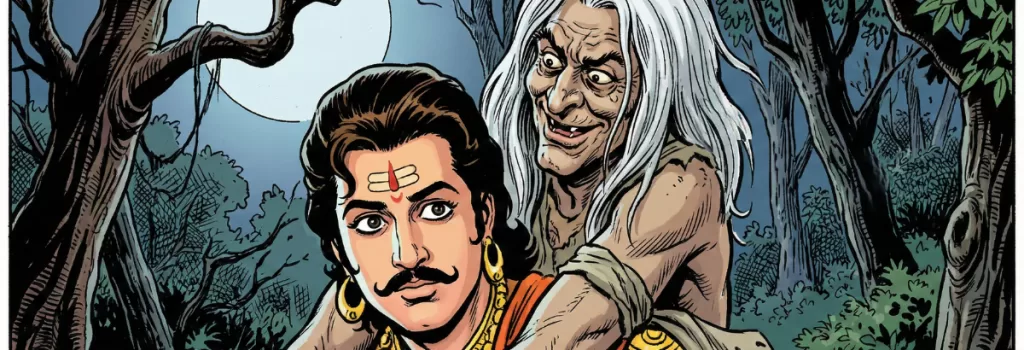
In the classic Indian legend, King Vikramaditya makes a vow to a mendicant to fetch a Betaal (a celestial spirit inhabiting a corpse) from a distant tree. The journey is a psychological gauntlet. As Vikram carries the Betaal on his back through a dark cremation ground, the spirit tells him complex stories that end in impossible moral riddles.
The trap is total: If Vikram knows the answer but stays silent, his head will shatter. If he speaks the answer, he breaks his vow of silence, and the Betaal flies back to the tree, forcing the King to start the grueling journey all over again. Vikram’s struggle isn’t just physical strength; it is the mental endurance to handle a burden that constantly talks, tests, and tempts him to fail.
The B2B Application: You are Vikram, the Client is your Betaal
In the world of high-stakes B2B sales, the roles are often misunderstood. To succeed, you must recognize that you are Vikram, and your client is the Betaal.
When a B2B decision-maker enters a meeting, they are not coming “light.” Like the Betaal, they “cling” to your back with the heavy weight of internal pressures: quarterly targets, shrinking budgets, and the terrifying professional risk of making a wrong decision. Their relentless technical queries and procurement hurdles are the “riddles” they use to test you. They aren’t just looking for a vendor; they are testing to see if you are a “King” strong enough to carry their burden without buckling under the pressure.
The Strategy: The Narrative of Assurance
Most B2B marketers fail because they try to impress the Betaal with complexity. They pelt a burdened client with jargons. This is a fatal mistake. It adds cognitive load to a person who is already mentally exhausted by their own corporate riddles.
To win, you must shift from Information to Assurance.
- The Goal: Your job is not to prove you are the smartest person in the room (which just makes the Betaal fly back to the status quo).
- The Execution: Your job is to demonstrate that you can carry the weight of their anxiety. When you address the client’s fear of failure as clearly as you address your product’s specifications, the “burden” finally feels secure. You win the deal not when the client understands your tech, but when they feel they can finally stop struggling because you are the one holding the weight.
Let’s assume a scenario –
A small robotics firm in Pune was competing against established German conglomerates for a contract with a massive auto manufacturer. The German pitch focused on superior engineering. The Pune firm could not compete on brand.
Instead of pitching specs, the founder applied these lessons for Indian business storytelling. He addressed the client’s anxiety regarding downtime: “Sir, last year, a factory in Chakan lost ₹2 Crores in 48 hours because they had to wait for a European engineer to fly in during the monsoon. If our robot breaks down, my engineer will be at your gate in 45 minutes, regardless of the rain. We are your neighbors.”
The client signed. They didn’t buy a robot; they bought the assurance that the production line would never stop.
The “Thirsty Crow” (Incremental Innovation vs. Process Fatigue)
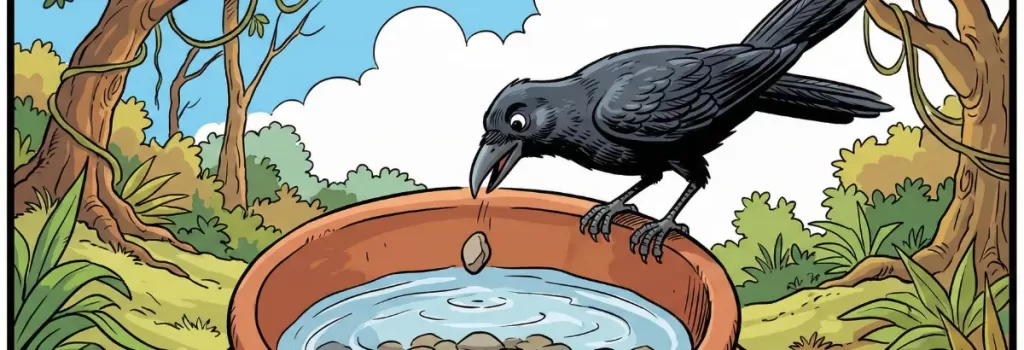
In the classic fable, a thirsty crow encounters a pitcher with water at the very bottom, just out of reach. The crow doesn’t waste energy trying to tip the heavy pot or wait for a sophisticated tool. Instead, it adopts a method of Strategic Incrementalism. By dropping small pebbles into the pitcher one by one, the crow slowly but surely raises the water level until it can drink. The lesson isn’t just about resourcefulness; it’s about the power of small, consistent actions to solve a seemingly “unreachable” problem.
The B2B Application: Solving for Process Fatigue
The average Indian B2B SME has a deep-rooted, cultural aversion to what they call “Heavy Process.” When they hear terms like “Digital Transformation,” “Full-Scale ERP,” or “Six-Month Implementation,” they don’t see progress. They see disruption, expense, and delay.
For these clients, a massive solution feels like a heavy pitcher they aren’t sure they can tip. They are skeptical of long-term promises and are terrified of operational paralysis – the fear that the new solution will break their existing business before it starts helping. They aren’t looking for a revolution; they are looking for a way to reach the water without breaking the pot.
The Strategy: The “Pebble” Approach (Low Friction, High Impact)
Most B2B SMEs fail by trying to sell the ocean. They pitch the total transformation of the client’s business, which only increases the client’s anxiety. To win in this environment, you must stop selling the destination and start selling the Pebble.
- Don’t Sell the System; Sell the Quick Win: Identify the single most painful burning problem the client has today. That is your first pebble.
- Low-Friction Entry: The Pebble should be easy to drop in. Meaning it requires minimal budget, minimal training, and zero operational downtime.
- The Accumulation Effect: Once the first pebble raises the water level (shows ROI), the client develops the appetite for the second and third. You don’t win by demanding a total overhaul; you win by making success feel inevitable, one small, digestible solution at a time.
In Indian B2B, the salesperson who brings a bag of pebbles is often more successful than the one who brings a blueprint for a new well.
Here’s another assumed B2B SME scenario –
A SaaS founder attempted to sell a complex CRM suite to a traditional textile merchant in Surat. The merchant rejected the pitch, fearing complexity.
The founder pivoted, applying lessons for Indian business psychology. He asked, “How much time do you waste shouting at staff to find a customer’s phone number?” The merchant admitted it happened fifty times a day. The founder replied, “I have a simple tool. It is a WhatsApp bot. You type the name; it gives you the number immediately. No login required.”
The merchant bought the “pebble” because it solved an immediate thirst. Once trust was established, he eventually upgraded to the full CRM.
The “Birbal Model” (The Challenger Sale)
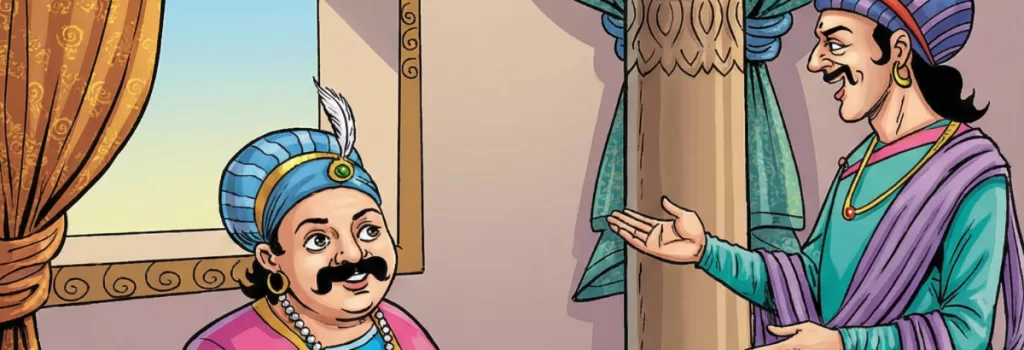
Emperor Akbar was the most powerful man in the world, yet his most prized asset was the wit of Birbal. While the royal court was filled with sycophants who whispered only what the Emperor wanted to hear, Birbal’s value lay in his dissent. He used humor and sharp logic to challenge Akbar’s perspective, often proving the Emperor wrong without ever causing him to lose face. Birbal wasn’t a servant; he was a mirror. He provided the unvarnished truth that allowed a powerful leader to remain grounded.
The B2B Application: Escaping the “Yes-Man” Trap
In the Indian corporate hierarchy, CEOs and decision-makers are often trapped in an echo chamber. They are surrounded by internal teams and “Yes-Men” vendors who are too afraid of losing their jobs or contracts to speak the truth. These leaders are secretly starving for a Trusted Advisor, someone with the professional spine to tell them when they are walking toward a cliff.
When you act as a Vendor, you default to Yes, Sir. When you act as a Partner, you provide the Unvarnished Truth. Applying this to Indian business means recognizing that your value isn’t just in what you do, but in what you prevent the client from doing wrong.
The Strategy: From Vendor to Challenger
Most sales teams act like sycophants: “Yes, we can do it all, and we can do it by tomorrow.” To a sophisticated CEO, this smells of desperation and commodity. To command premium pricing and long-term loyalty, you must transition from an Order Taker to a Challenger.
- The Risk Mitigator: Instead of promising the world, highlight the risks the client hasn’t seen. Pointing out a flaw in their current plan is the fastest way to build authority.
- The “No” Factor: A vendor never says no. A Birbal-style advisor knows that saying “No, this won’t work for you” builds more trust than a thousand “Yeses.”
- Commanding the Room: You don’t get premium pricing by being the most compliant; you get it by being the most indispensable. When you stop being a cost-center and start being the truth-teller who protects the CEO’s legacy, the price becomes secondary to the partnership.
In a market full of echoes, be the one voice that offers a different perspective.
Let’s assume this scenario to understand the concept better –
A Chartered Accountant firm pitched to a high-growth startup founder who was dismissive of audits. Other firms nodded politely.
The “Birbal” CA challenged him: “Sir, Company X grew 400% last year. Then they received a Section 44 violation notice. The founder spent the next six months in legal battles instead of sales meetings. I am not here to do your taxes; I am here to ensure you stay out of court.”
The founder hired him immediately.
Three Modern Narrative Failures
Even with good intentions, marketers often ignore these lessons for Indian business and commit structural errors:
1. The Template Error (Generic Messaging)
Sending a case study designed for a Pharma client to a Cement client is fatal. A Pharma leader prioritizes purity; a Cement leader prioritizes volume.
- The Solution: Hyper-Personalization. Speak the dialect of the industry. Use terms like “GSM” for printers or “FSI” for builders.
2. The Ingredient List (Feature Dumping)
Listing technical specifications (ISO 27001, 99.9% uptime) is like listing ingredients without describing the taste.
- The Solution: The “So What?” Rule. Clients do not buy ingredients; they buy outcomes.
3. The Protagonist Error
In many corporate videos, the company positions itself as the Hero (“We were founded in 1990…”). This contradicts fundamental lessons for Indian business storytelling. In the narrative, the Client is the Hero (Arjuna); you are the Charioteer (Krishna).
The Hootbox Narrative Architecture
To implement these lessons for Indian Folklore Story Marketing, use the following structure for your next sales deck or LinkedIn article.
- The Hook (The Burning Village): Start with the systemic problem. “Most Textile Mills lose 15% of raw cotton due to undetected moisture.”
- The Villain (The Invisible Enemy): Personify the issue. “This isn’t just waste; it is an invisible thief stealing your net margin.”
- The Struggle (The Failed Attempts): Acknowledge their effort. “You tried manual checking. You tried expensive imported sensors. The problem persists.”
- The Guide (The Pebble/Birbal): Introduce the solution. “We introduced a localized IoT moisture meter calibrated for Indian humidity levels.”
- The Resolution (The Outcome): Quantify the peace of mind. “The mill now saves ₹20 Lakhs monthly.”
The Consistency Principle
Finally, one of the most enduring lessons for Indian business is the “Dabbawala Principle.” A story told once is an anecdote; a story told daily becomes a brand legend. The Mumbai Dabbawalas are iconic not because they delivered one tiffin on time, but because they have done it millions of times with Six Sigma precision.
Your storytelling must be a campaign, not a cameo. You must consistently position yourself as the Birbal (The Advisor) or the Pebble Dropper (The Innovator) across every channel.
B2B is built on relationships, and a relationship is simply a collection of shared stories. Stop hiding behind corporate jargon and try Indian Folklore Story Marketing. Tell the story that makes your client say, “You understand my business better than I do.” Let’s explore these stories together.
FAQs
Does storytelling actually work in cold B2B emails, or does it hurt open rates?
Storytelling works, but only if it respects the “Preview Text” rule. In 2026, executives scan emails on mobile. If your story starts with “Once upon a time,” it will be deleted. The trend is “Micro-Storytelling.” Start with a “Cold Open” hook in the first sentence that hints at a narrative.
Bad: “I am writing to tell you a story about a client…”
Good: “A manufacturing plant in Gujarat lost 40% of its inventory last month. The culprit wasn’t theft; it was humidity.” This approach engages the brain’s curiosity gap immediately without wasting the reader’s time.
How can we use ‘Founder Stories’ in our newsletters without sounding arrogant?
The key is to use the “Vulnerable Hero” framework. Current email trends show that polished success stories have lower engagement than “Failure & Recovery” stories. Do not write about how smart your founder is. Write about a mistake they made, the penalty they paid, and the lesson they learned. This builds high trust because it humanizes the brand. In the context of lessons for Indian business , humility is a stronger currency than bravado.
Is it better to send plain text emails or HTML templates for story-based marketing?
Plain text is vastly superior for storytelling. HTML templates with heavy branding, logos, and sidebars scream “Advertisement.” A plain text email looks like a letter from a friend or a consultant. Data consistently shows that plain text emails have higher deliverability and read-through rates for long-form content. If you are telling a “Birbal” style advisory story, the format should look like personal correspondence, not a flyer.
How do we apply the ‘Vikram Betaal’ logic to an email drip sequence?
The ‘Vikram Betaal’ structure (Riddle/Problem -> Answer/Solution) is perfect for a “Soap Opera Sequence” in email marketing.
Email 1 ( The Riddle): Describe a massive industry problem (The Burden). End the email on a cliffhanger: “We tried everything to fix this, but nothing worked until we realized one thing…”
Email 2 (The Solution): Deliver the answer (The Wisdom). Explain the methodology used to solve the problem.
Email 3 (The Pitch): Offer the product as the tool to implement that wisdom. This keeps the reader engaged across multiple days.
Can AI write effective business fables for our marketing emails?
AI is excellent for structure but poor for “Soul.” If you ask ChatGPT to “write a story about a frustrated engineer,” it will give you generic clichés. The trend in 2026 is “AI-Augmented Authenticity.” Use AI to research the technical pain points of your audience (e.g., “common causes of boiler failure”), but write the actual narrative using specific, real-world anecdotes from your own sales team. Specificity (names, locations, exact temperatures) is what sells, and AI often lacks this local context.
How long is ‘too long’ for a story-based sales email?
The old rule was “keep it short.” The new rule is “keep it interesting.” If a story is relevant and solves a pain point, executives will read 500+ words. However, you must use “Bucket Brigades” – short, punchy sentences that encourage the reader to keep sliding down the page. If your story is a wall of text, it will be ignored. If it is visually spaced out and gripping, length is not a barrier.
How do we measure the ROI of a storytelling email campaign?
Do not look at Open Rates; they are often inflated by bots. Look at “Reply Rates” and “Sentiment.” A transactional email gets clicks. A storytelling email gets replies like, “This is exactly what we are facing right now.” In lessons for Indian business , these qualitative replies are the leading indicators of high-ticket sales. Track how many conversations started from a story versus a direct pitch.
What is the best subject line strategy for a story email?
Curiosity gaps win. Avoid descriptive subject lines like “Our Company Newsletter – Jan 2026.” Instead, use a “Teaser” from the story.
Option A: “How we fixed a logistics error.” (Boring)
Option B: “The truck that never arrived.” (Curiosity)
Option C: “Why the CEO fired his best vendor.” (High Drama) The subject line’s only job is to get the email opened; the story’s job is to sell.
How do we use ‘Social Proof’ stories without violating client NDAs?
You do not need to name the client to tell the story. Use the “Anonymized Avatar” method. “We worked with a Top 5 Pharma Company in Hyderabad…” is often enough context. Focus on the Problem and the Resolution, not the Brand Name. The credibility comes from the technical detail of the solution, not just the logo of the client.
Should we segment our email list for storytelling?
Absolutely. A story that resonates with a CFO (about saving money) will bore a CTO (who cares about tech stack). You must segment your list by “Job to be Done.” Send the “Thirsty Crow” story (resourcefulness/efficiency) to the Operations Manager. Send the “Birbal” story (risk mitigation/compliance) to the Legal or Finance Head. Relevance is the key driver of engagement.